
Shopping smart means looking past buzzwords and picking pieces that match your space and habits. This roundup helps you shop with confidence by explaining what that phrase really means in everyday use.
If you have limited counter space, fewer pieces and smarter shapes matter more than a full set. We compare ceramic coatings, stainless steel, cast iron, and copper so you can see who each option fits best.
We’ll call out oven limits, dishwasher reality, and induction compatibility. Expect clear tradeoffs and practical picks from brands like All-Clad and Le Creuset, plus honest notes on price and longevity.
You’ll learn how to match pans to your cooking habits and avoid overheating PFAS/PTFE finishes. By the end, you’ll know which options keep convenience and safer materials in balance.
Key Takeaways
- Understand what the term means in real kitchens.
- Choose fewer, smarter pieces for tight storage.
- See which materials suit specific cooking styles.
- Find practical specs: oven, dishwasher, induction.
- Balance budget with how often you’ll use each pan.
Why “Non-Toxic” Matters When You’re Shopping for Nonstick</h2>
Labels can be confusing, so start by decoding the basic terms you’ll see on boxes and product pages.
PFAS, PTFE, and PFOA—plain definitions
PFAS are a group of man-made chemicals used to make surfaces slick and stain-resistant. PTFE (commonly called Teflon) is one type of PFAS. PFOA was an older processing chemical that the U.S. banned in 2014.
Why “forever chemicals” matters
PFAS earn that nickname because they break down very slowly in the environment. Many people prefer fewer chemicals near their food and home, which is why alternatives get attention.
Overheating and health risk
If a PFAS-based coating gets too hot it can release fumes. Those fumes have been linked to temporary flu-like symptoms—fever, muscle aches, and cough—sometimes called “Teflon flu.”
Label pitfalls to watch
“PFOA-free” does not mean PFAS-free, and “Teflon-free” can still be confusing. Some marketing claims leave gaps that matter in your kitchen.
Used within temperature limits, these surfaces can be safe. But if you want to avoid PFAS entirely, look for alternatives and inspect older pans for wear that could leach food-adjacent residues.
How We Chose These Top-Rated Picks for US Home Cooks</h2>
We used real cooking and stress tests so you can trust how pans perform when daily meals are on the line. Our process measures heat, design, durability, cleaning, and final value. That helps you pick pieces that suit tight counters and busy schedules.
Performance tests that reveal true heat distribution and browning
We cooked rice, sautéed vegetables, and seared meats to expose uneven heat and hot spots. That showed which pans brown reliably and which stall or scorch.
Heat distribution mattered most because one pan often handles many jobs in a compact setup.
Design checks: weight, balance, handles, and lids
We evaluated weight and balance when lifting a full pan. Handles were checked for comfort and secure grip.
We also tested lid fit and seal for simmering and stacking in tight cupboards.
Durability and abuse testing
Durability testing included scraping with metal utensils and controlled drops to reveal scratches and dents. Warping and coating wear were key signals you should watch.
Easy-clean standards and dishwasher reality
We separated manufacturer dishwasher claims from hands-on results. Some pans survive the dishwasher but lose finish faster; others do better with hand washing.
Value judged after testing
Price was revealed only after we ranked performance and durability. That way you see true value and avoid paying more for looks than function.
Quick Buying Guide for Small Kitchens: What to Prioritize</h2>
A smart shortlist helps you pick the few pieces that handle most meals in tight storage. Think of your next purchase as a tool to expand cooking options, not just fill a cabinet.
Best piece count versus cupboard space
Choose a compact set that covers boiling, frying, and simmering. A common “complete” set in a tiny space is a 10–12 inch frying pan, a 3-quart saucepan with lid, and a 5–6 quart pot. This lineup lets you cook full meals, not just reheat leftovers.
Multitasking shapes that replace extra pans
Pick a sauté pan with higher walls; it can saute, braise, and shallow-fry in one pan. A deep frying pan or shallow Dutch oven often reduces the need for another pan or pot.
Storage-friendly extras that reduce clutter
Look for nesting pieces and stackable lids. Add soft protectors or a slim pan rack if you have one cabinet or a single drawer.
- Prioritize shared lids that fit multiple pieces to save space and time.
- Check weight and handle comfort—you should lift full pans every day without strain.
- Choose pieces that stack neatly and match your cooking style to ensure you actually use the set.
“Buy less, choose better pieces that do more.”
Best Overall Ceramic Set for Small Kitchens: Caraway Nonstick Ceramic Cookware Set</h2>
If you want a stylish, space-smart set that actually releases eggs, Caraway is worth a close look. The brand’s ceramic coating is free of heavy metals and PFAS/PTFE/PFOA, so the surface performs without those additives.
https://www.youtube.com/watch?v=DJNUvonVYMk
Why it stands out
Caraway cookware balances true release and daily durability. Eggs and omelets slide out, rice cleans up without stubborn bits, and the pans feel heavy-but-balanced when you lift them.
What you get and storage wins
The set includes a 10.5-inch frying pan, a 3‑quart saucepan with lid, a 4.5‑quart sauté pan, and a 6‑quart stockpot. Caraway adds magnetic pan racks and a lid holder that save cabinet space and keep lids tidy.
Heat, stovetop, and oven details
These pieces are induction-ready and oven-safe up to 550°F. That lets you finish seared dishes in the oven and shift between stovetop and oven without a second pan.
Care and what to watch
Hand-wash only is the reality here. The finish can discolor, and the coating may wear over time if you use high heat or metal tools. Use lower heat, gentle utensils, and catch stains early to extend life.
“A compact, well-designed set that performs like more expensive pans and tucks away neatly.”
Best Budget Ceramic Cookware Set Under $200: Quince Ceramic Nonstick Set</h2>
On a tight budget, this Quince set gives you ceramic release and simple care that saves time. It sits under a $200 price point and feels like an easy entry-level pick.
Why it’s worth a look
Quince offers PFAS-free ceramic that releases eggs and light sauces without much oil. The big convenience is dishwasher-safe cleanup, which helps during busy weeks.
Materials and real-world tradeoffs
The bodies are lightweight aluminum with an induction-compatible base. That makes pans easy to lift and quick to move, but it also reduces browning power versus steel-heavy pieces.
What you’ll notice when cooking
Expect slower heat transfer and a milder sear on steaks or seared veg. The stockpot takes longer to reach a boil; using the lid speeds things up and saves water.
- Specs: oven-safe to 500°F and induction-ready.
- Dishwasher-safe for fast cleanup; hand rinse works fine too.
- Good entry point at this price; add one heavier pan later if you want better high-heat searing.
“A budget-friendly set that covers daily meals and cleans up easily.”
Best All-in-One Pan for Tiny Spaces: Our Place Always Pan</h2>
The Always Pan shines when one piece must handle weeknight dinners and save cupboard space.
One tool, many jobs. This pan sautés, fries, steams, boils, braises, and finishes in the oven up to 450°F. That range makes it a true all-in-one when you want to cut down on extra pots and lids.
Included accessories that cut clutter
The set includes a steamer/strainer insert, a snug lid, and a nesting spatula. These parts stack neatly inside the pan so you can keep one drawer or shelf tidy.
What the coating and safety claims mean
The Always Pan uses a ceramic coating that the brand states is free of PTFE, PFOA, and PFAS and is lead- and cadmium-free. That reduces worry about certain chemicals while you cook.
Care rules to keep it working
Avoid metal tools and high heat. Use wood or silicone utensils and don’t overheat an empty pan. Sources differ on dishwasher safety, so follow the care guide for your version to protect the finish.
| Function | Common meals | Included accessory |
|---|---|---|
| Sauté / frying | Sautéed veggies, fried eggs | Nesting spatula |
| Steam / strain | Steamed dumplings, veggies | Steamer/strainer insert |
| Braise / oven finish | Braised chicken, pan-roasted fish | Snug lid |
“One pan that actually replaces a stack—ideal when you want fewer pieces and more cooking options.”
Best Dishwasher-Safe Ceramic Set for Busy Weeks: GreenPan Valencia Pro</h2>
If you want weekly cleanup to take minutes instead of hours, the GreenPan Valencia Pro is built to help.
Why this set works — Valencia Pro pairs Thermolon diamond-infused ceramic coating with a durable metal body. That design stands up to everyday wear, higher heat, and frequent dishwasher cycles without losing release quickly.
Thermolon diamond-infused finish
The coating is reinforced with diamond particles to resist scratching and abrasion. Expect easy release on eggs, fish, and sautéed vegetables and less elbow grease after meals.
High-heat and oven notes
Oven-safe to 600°F, these pans let you sear then finish in the oven. Note: glass lids top out around 425°F, so remove lids when pushing very high heat.
Practical small-space tradeoff
The frying pans have shorter handles that can run hot. Use mitts or a longer grip habit to protect your hands.
- Dishwasher-safe: yes — designed for fast cleanup.
- Compatible with induction and everyday stovetop use in the US.
“Quick warm-up, reliable release, and minimal scrubbing — a true busy-week ally.”
Best Starter Set on a Tighter Budget: GreenPan Chatham</h2>
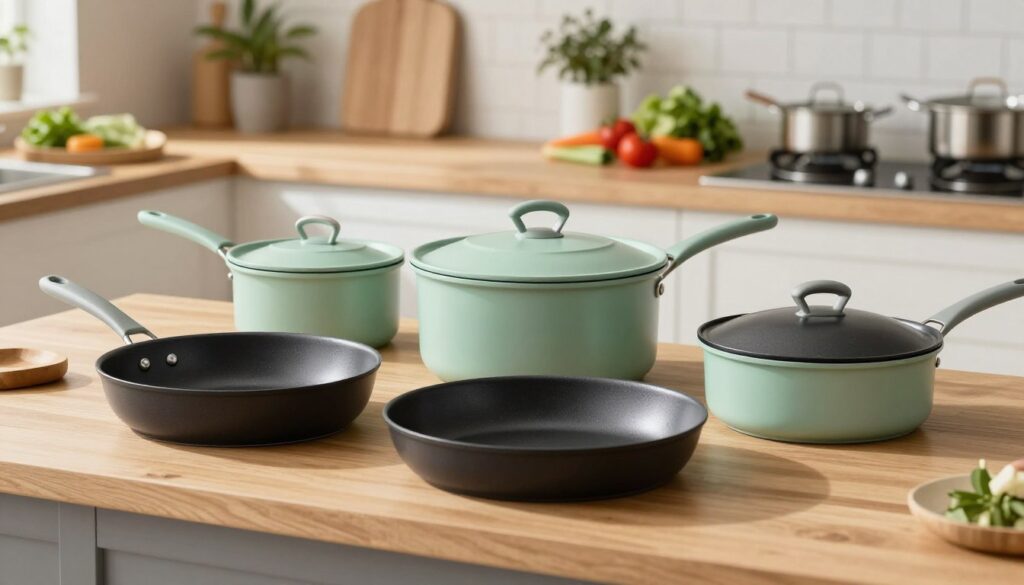
When you’re building a kitchen on a budget, pick pieces that pull double duty and clean up fast. The GreenPan Chatham set delivers core pots and useful frying pans without a high price. It uses Thermolon ceramic coating and is dishwasher-safe, which makes quick weeknight cleanup easier.
What you get for the price
This set includes a mix of pans and a covered saucepan so you can boil, sauté, and simmer. The pieces are oven-safe to 600°F and come with snug lids that help when you need to finish in the oven.
Where you may need add-ons
Capacities trend a bit small, so larger recipes may force you to buy a bigger pot later. Handles run short and can heat up; keep mitts handy and adjust your grip while cooking.
| Feature | Benefit | Limit |
|---|---|---|
| Thermolon ceramic coating | Good release and easy clean | Not as heavy-duty as pro sets |
| Dishwasher-safe | Saves time on cleanup | Finish lasts longer with gentle care |
| Oven-safe to 600°F | Versatile cooking and finishing | Smaller capacity on some pans |
“A smart starter set that performs well without feeling temporary.”
Best Stainless Steel Cookware Set When You Want Zero Coating: Cuisinart Multiclad Pro</h2>
If you want a truly bare-metal option, stainless steel sets deliver durability without a surface coating.
Why stainless is a worry-free metal choice
Stainless steel resists scratches, won’t flake, and stands up to daily abuse. You don’t rely on a fragile layer, so the set lasts years under regular use.
Aluminum core benefits in plain terms
The Multiclad Pro sandwiches an aluminum core between steel layers. That combo heats faster and spreads heat evenly across the pan.
Even heat means fewer hot spots and better browning when you sear steaks or sauté vegetables.
Small-kitchen technique: reduce sticking with preheat
Preheat the skillet, add a little oil, then add food. That simple step forms a temporary barrier and cuts sticking on a steel surface.
Tip: If a pan smokes, it’s too hot—lower the heat and wait a moment before adding ingredients.
- Learning curve: stainless can stick if you rush, but you’ll master it in a few uses.
- Versatility: sear, deglaze, simmer, and transfer pieces to the oven (safe to 550°F).
- Care: it is dishwasher-safe, but hand-washing keeps the finish shinier in crowded storage.
“A steel set gives you a workhorse range of pans that tolerate high heat and heavy use.”
Best Upgrade Stainless Steel for Long-Term Durability: All-Clad G5</h2>
When you upgrade to pro-grade steel, you buy speed and predictable performance that lasts. The All-Clad G5 is built as a long-term investment in reliable cooking, not a trendy impulse buy.
High-tech construction that reacts quickly
The G5 layers stainless steel with precision aluminum and a graphite core. That graphite layer improves responsiveness so the pan tracks changes in flame or element faster than many other steel designs.
Performance you’ll notice right away
You’ll see faster boiling of water and tighter simmer control when you lower heat. Browning is strong and consistent, which makes searing and deglazing more reliable in daily use.
Tradeoffs and care
The downside is obvious: this is a premium price upgrade. You pay more up front, but you get exceptional durability and pro-level handling that can replace multiple lesser pans.
- Why pay more: faster response, even heat, and long-term durability.
- Limits: dishwasher-safe and oven-safe to 600°F; still, gentle care keeps the finish at its best.
“Fewer, better pieces beat a crowded cabinet when you cook often and want lasting performance.”
Best Cast Iron Option That Lasts for Years: Lodge Cast Iron</h2>
Lodge cast iron offers a low-cost, high-durability option that can serve your cooking needs for years. A single skillet can become a workhorse, passed down or kept in heavy rotation.
Why seasoning makes a skillet feel naturally nonstick-like
Seasoning builds a slick, polymerized layer on the metal. You still use some fat, but eggs and frying foods release far better over time.
Small-kitchen realities: weight, hot handles, and storage
Cast iron is heavy. That matters when you lift a full pan or fit it on a crowded shelf. Handles get very hot, so plan mitts or a trivet nearby.
Care basics you can stick to
Don’t soak cast iron or run it in the dishwasher. Wash quickly, dry fast, and rub a light oil after cooling to protect the seasoning and prevent rust.
| Feature | Benefit | Practical note |
|---|---|---|
| Long life | Serves you for years with proper care | Improves performance as seasoning builds |
| High-heat searing | Better browning than many coated pans | Complements ceramic pieces when you need intense heat |
| Rugged metal | Withstands rough tools and heavy use | Choose one classic Lodge skillet if space is limited |
“A well-cared-for cast iron pan becomes one of the most reliable pieces in your kitchen.”
Best Ceramic-Coated Stainless for “Nonstick Feel” With More Structure: Made In CeramiClad</h2>
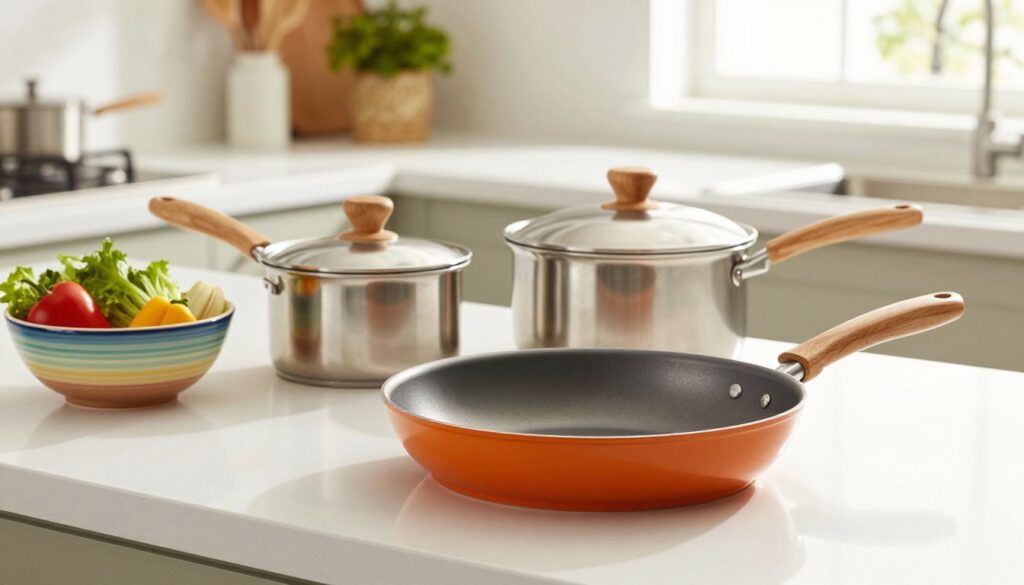
If you want ceramic release with a firmer build, Made In CeramiClad blends both goals into one line. It pairs a smooth interior with a layered metal body so the surface feels slick while the shell resists warping.
Why 5-ply matters
Five layers of stainless steel and aluminum give the pan a heavier, steadier feel than thin aluminum bodies. That 5‑ply construction improves heat spread and reduces warp when you push high temperatures.
Temperature flexibility
The set is oven-safe to 550°F. That temp means you can finish seared chicken, bake frittatas, or make one‑pan dinners without swapping to a different pot.
Design choices that extend life
Stainless rims protect the ceramic against chipping at the edges. Interchangeable lids cut clutter: fewer lids cover more pieces, which saves storage and speeds meal prep.
Who should buy it: if you want PFAS/PTFE‑free coatings, a sturdy steel shell, and better long‑term durability—and you’re willing to pay above entry level—CeramiClad is a strong option.
“A hybrid that gives you ceramic release with the confidence and strength of layered steel.”
When Copper Makes Sense in a Small Kitchen: Hestan CopperBond</h2>
Copper shines when you need instant response and fine temperature control during a delicate sauce or a fast sear.
Why choose copper: Copper conducts heat very quickly, so it reacts the moment you raise or lower the flame. That responsiveness helps you turn down the stovetop without overshooting and saves time when you need a quick sear.
How copper compares to steel and aluminum
Copper outpaces most steel and aluminum in responsiveness. You’ll notice tighter control while searing and smoother adjustments when simmering sauces.
Modern safety: steel-lined interiors
Good news: modern copper pieces use a stainless or steel lining so copper does not touch your food. That prevents leaching and keeps flavors clean while you cook.
Buying considerations and tradeoffs
- Hestan CopperBond is induction-compatible and oven-safe to 600°F — handy if you finish on high heat.
- Cost is the big downside: a full set can be pricey, so consider a single upgrade pan if you only need precision for select recipes.
- Handles on some copper pans can feel narrower or hotter; in a tight space you’ll value comfortable grips when lifting full pans.
“If you chase fast, precise heat shifts, one well-made copper pan often delivers more than an entire midrange set.”
Material Matchmaker: Choose the Right Surface for Your Cooking Style</h2>
Choosing the right material starts with a simple question: what do you cook every week? Match a pan’s surface to your meals and habits so you buy a tool that helps, not one that frustrates.
Ceramic coating for easy clean eggs, fish, and weeknight cooking
Ceramic surfaces release eggs and delicate fish with less oil, making cleanup quick. Many ceramic coatings perform like traditional nonstick on low- to medium-heat tasks.
Expect wear and some discoloration over time; treat these pans gently and avoid constant high heat.
Stainless steel for searing, deglazing, and high-heat durability
Stainless steel is the workhorse when you need a true sear or to deglaze a pan. It tolerates higher heat and rough scrubbing and can last indefinitely with routine care.
Preheat, add oil, then food to reduce sticking and get the best browning.
Cast iron and carbon steel: seasoning-based release without added chemicals
Cast iron and carbon steel build a seasoned surface that gives near nonstick performance without extra chemicals. These metals are heavy, heat well, and can also last a lifetime if you maintain the seasoning.
Expect more hands-on care: quick wash, dry, and a swipe of oil after use.
Pure ceramic cookware expectations and heat tradeoffs
Pure ceramic pots offer chemical-free surfaces but usually heat slower and may not brown as well as metal. They suit gentle simmering and low-heat baking but can struggle with fast sears.
- Choose this if: you cook eggs and fish a lot — pick ceramic coating.
- Choose this if: you want searing and deglazing — go stainless steel.
- Choose this if: you accept maintenance for lasting release — pick cast iron or carbon steel.
“Match the material to your meals and you’ll save time, money, and hassle.”
Small-Kitchen Fit Checklist: Sizes, Lids, Handles, and Storage</h2>
Measure your shelves before you buy so the set you pick actually fits. Start with a short list of the pieces you’ll use most and skip extras that only take space.
Best compact lineup
Pick a fry pan, a 3‑quart saucepan with lid, a 4–5‑quart sauté pan, and a 5–6‑quart stockpot or Dutch oven.
That mix covers eggs, simmering, braising, and one‑pot meals without doubling pieces.
Lid details that matter
Look for venting to prevent boil‑overs and shared lids that fit multiple pots. Glass lids often limit oven use—Valencia Pro glass lids top out near 425°F—so check oven limits before you bake or broil.
Handles and balance
Test handle length, angle, and rivets. A well-balanced pan feels steady when full; short or thin handles can heat up on some frying pan designs.
Nesting, racks, and protectors
Choose sets with nesting options and soft protectors to guard the surface when stacked. Caraway’s included racks and lid holder and GreenPan’s pan protectors are real time‑savers in tight storage.
“Buy pieces that do more, stack neatly, and survive daily use.”
non-toxic non-stick cookware for small kitchens: What to Buy Based on Your Budget</h2>
Pick the budget band that matches how you cook. A clear price split—budget, midrange, premium—helps you decide fast without re-reading every review.
Best value sets for apartments and starter kitchens
If you need a basic lineup that cleans easily and tucks away, choose lightweight sets like Quince under $200 or the GreenPan Chatham. These sets give good release and a compact footprint at a low price.
Expect shorter lifespans on coatings; plan to replace ceramic pieces sooner than metal ones.
Midrange picks for everyday cooking with better durability
Midrange buys—Caraway and GreenPan Valencia Pro—pay for thicker bodies, better finish, and longer life. You gain nicer handles, shared lids, and more consistent heat.
These sets balance convenience and durability without a pro price tag.
Premium splurges if you want pro performance in fewer pieces
Spend up if you want one or two pro-level pans that last: All-Clad G5 or Hestan CopperBond deliver fast response and years of service. Pair one Always Pan-style multitasker plus a stainless steel skillet to cover most meals.
| Budget | Midrange | Premium | Best use |
|---|---|---|---|
| Quince / GreenPan Chatham | Caraway / Valencia Pro | All-Clad G5 / Hestan CopperBond | Everyday eggs & light sautés |
| Low price, lighter bodies | Better build, dishwasher-safe options | Pro responsiveness, long-term value | Mix one multitasker + 1 steel pan |
| Replace ceramic sooner | Balanced durability and style | Years of heavy use, higher initial cost | Save space by owning fewer, stronger pans |
“Buy fewer pieces that do real work. Match material to meals and you’ll save time and money.”
Conclusion</h2>
Pick a single reliable skillet or a compact collection that fits your shelf and your weekly rhythm. Start with one great pan and a shared-lid set to save space and time.
Safety first: avoid products with lingering PFAS-based chemicals if that worries you. Choose ceramic-coated pieces or plain stainless steel and cast iron when you want fewer additives and long-term durability.
Check each item’s heat and oven limits, including lid ratings, and note dishwasher tradeoffs. Some coatings wear faster with high heat or machine washing; steel and cast iron tolerate tough stovetop work and high temperatures better.
Buy to match how you cook. Build your collection slowly—add a heavy steel skillet or a cast iron pan when you need high-heat performance—and treat coated surfaces gently to extend life.
FAQ
What does “PFAS-free” mean and why should you care?
PFAS-free means the cookware’s surface doesn’t contain per- and polyfluoroalkyl substances, a group that includes PFOA and related chemicals. These are tied to long-term health and environmental concerns. Choosing PFAS-free ceramic or stainless options reduces the risk of chemical transfer if a coating degrades or overheats.
How do ceramic coatings differ from PTFE (Teflon) coatings?
Ceramic coatings are inorganic and typically derived from silica; they feel slick but are not the same chemically as PTFE. PTFE can off-gas at very high heat. Ceramic can fade or lose slickness over time, especially with metal utensils or abrasive cleaning, but it doesn’t carry the same PTFE/PFOA chemistry.
Are stainless steel pans truly “no-coating” and safe to use?
Yes — polished stainless steel like Cuisinart Multiclad Pro or All-Clad contains no surface polymer coating. You’ll rely on technique (preheating, oiling) to minimize sticking. These sets use aluminum or multi-ply cores to improve heat distribution without chemical coatings.
Can ceramic-coated pans handle high oven temperatures?
Many ceramic-coated pans are oven-safe, but limits vary by brand. Some GreenPan lines reach 600°F while others top out at 350–550°F. Check the manufacturer’s max temperature and consider lid limits, since glass lids often have lower ratings.
How do you clean and maintain ceramic or coated pans to extend life?
Let pans cool, then wash with warm soapy water and a soft sponge. Avoid abrasive pads and metal utensils. For stuck-on food, soak briefly. Even if a set is labeled dishwasher-safe, hand-washing usually preserves the coating longer.
Are cast iron and carbon steel better choices for longevity?
They can be. When seasoned properly, cast iron and carbon steel develop a natural, chemical-free nonstick layer. They tolerate high heat and develop flavor-holding surfaces, but they’re heavy and need careful drying and seasoning to prevent rust.
What should you prioritize when shopping for a compact kitchen set?
Prioritize a versatile lineup (a fry pan, saucepan, and a covered sauté or small Dutch), stackable or nesting design, and lightweight lids that share across pieces. Look for aluminum-core or multi-ply constructions for even heat in smaller burners.
How important is an aluminum core in stainless sets?
Very. Aluminum cores improve heat spread, reduce hot spots, and speed boiling. Multiclad or 5-ply designs with aluminum or graphite cores give performance closer to professional cookware while keeping the stainless interior worry-free.
Can copper or copper-lined pans leach into food?
Untreated copper can react with acidic foods, so reputable modern sets like Hestan CopperBond use stainless-lined interiors to prevent leaching. That gives you copper’s conductivity while protecting food and flavor.
Are one-pan all-in-one designs like Our Place Always Pan worth it?
If you need to minimize pieces and want multitasking versatility, yes. The Always Pan replaces several tools — sautéing, steaming, frying, and finishing in the oven. Note care rules: follow utensil limits and hand-wash if required to preserve the coating.
How do you avoid coating damage from overheating?
Use medium to medium-high heat for most tasks, preheat pans properly, and never leave an empty coated pan on high heat. If a pan smokes heavily or coating flakes, stop using it and replace it — do not attempt to eat food from a damaged surface.
Is dishwasher-safe labeling reliable for coating lifespan?
Dishwasher-safe is convenient but can speed wear. Detergents and high-heat cycles can dull ceramic coatings over time. Hand-washing extends appearance and performance, even if a brand advertises dishwasher compatibility.
How do you reduce sticking on stainless steel without coatings?
Preheat the pan until it’s hot, add a thin layer of oil, then wait until the oil shimmers before adding food. This creates a temporary bond that helps release seared foods. Proper heat and patience matter more than special sprays.
What are common warranty or longevity expectations across brands?
Warranty length varies: many ceramic-focused brands offer limited warranties covering defects but not normal wear. Premium stainless like All-Clad often has longer support. Expect coated surfaces to lose nonstick performance over several years depending on use.
Can you use metal utensils on ceramic-coated stainless pans like Made In CeramiClad?
Manufacturers generally advise using silicone, wood, or nylon tools to protect coatings. Some robust ceramic-on-stainless designs have reinforced rims and tougher coatings, but gentle utensils still prolong lifespan.
How do price tiers compare for small-kitchen buyers?
Budget sets (under 0) like basic GreenPan or Quince offer immediate value but may trade longevity. Midrange picks balance durable coatings and better cores. Premium stainless or layered constructions cost more but deliver years of consistent performance.
What should you do if a coating starts to chip or flake?
Stop using the pan for food. Chipping undermines safety and performance. Contact the brand about warranty or replacement, and transition to a stainless or well-seasoned cast-iron pan while you replace the damaged piece.
Are there safe ways to test a pan’s heat distribution at home?
Yes — heat the empty pan on medium, then sprinkle a few drops of water. If beads form and dance across evenly, heat spread is good. You can also sear a piece of bread or an onion slice to check for even browning across the surface.
Disclosure: We independently research and test products. If you purchase through our links, we may earn a small commission at no extra cost to you. This supports our work.

About the Author
Igor Silva is the founder of CNF Products Offer, where he researches, tests, and shares honest recommendations on everyday products—from non-toxic kitchen tools to smart gadgets for small apartments.
Based in São Paulo, Brazil, Igor believes that living well in a compact space doesn’t mean compromising on safety, functionality, or style. His mission is to cut through fake reviews and overpriced hype by highlighting only verified, affordable, and truly useful options.
When he’s not testing cordless drills or comparing cloud storage plans, you’ll find him organizing kitchen drawers or planning his next tiny-office upgrade.