You’re here to compare the best red light therapy devices for home use in 2026. This guide focuses on real specs, practical usability, and common goals like skin, acne, pain, and recovery.
Expect gradual results. Experts such as Ross Kopelman, MD and Jessica Weiser, MD note that benefits come from steady, long-term use rather than a single session.
You’ll see four main categories: face masks, panels, handhelds, and hair caps. Jump to the style that fits your routine.
This guide is organized to help you quickly. First we explain the science, then safety, how to choose, top picks, and step-by-step usage. We focus on what matters to U.S. buyers—warranties, returns, and HSA/FSA options when treatments are medical.
Bottom line: specs and dosing—not marketing—determine whether a product will deliver a meaningful light treatment at home.
Key Takeaways
- Compare products by specs and dosing, not slogans.
- Results appear with consistent, long-term use.
- Choose among masks, panels, handhelds, or caps.
- Guide covers science, safety, selection, and steps.
- We highlight U.S. buyer needs like warranties and HSA/FSA paths.
Why red light therapy is a top at-home treatment in 2026
In 2026, at-home light treatments rank high because they are simple, noninvasive, and easy to repeat. You can slot short sessions into busy days and keep a steady routine without clinic appointments.
What you can realistically expect for skin, acne, pain, and recovery
Expect gradual improvements. With regular sessions you may see calmer acne, modest softening of fine lines, and temporary easing of soreness. Results are usually subtle and build over weeks to months.
If skin is your priority, evidence is strongest there. Pain and recovery support vary by condition and person, so measure progress with photos and a simple log.
Home use vs. in-office light therapy treatments
Clinical systems often run at higher intensity, so they can work faster. At-home options trade top-end power for convenience and long-term maintainability.
- Start with multiple sessions per week, then taper to maintenance.
- Talk to a dermatologist if you combine treatments with prescriptions or in-office procedures.
How red light therapy works for your skin and body
Photobiomodulation in plain words: certain wavelengths of light interact with your cells’ mitochondria to boost ATP. This extra cellular energy supports repair, collagen signaling, and reduced inflammation.
Photobiomodulation and your mitochondria: the basic process
When the right wavelength hits tissue, mitochondria absorb photons. That triggers a faster energy cycle and repair signals.
That process is why regular sessions matter: cells need repeated stimulation to change how they function over weeks.
Depth and purpose: surface vs. deeper treatment
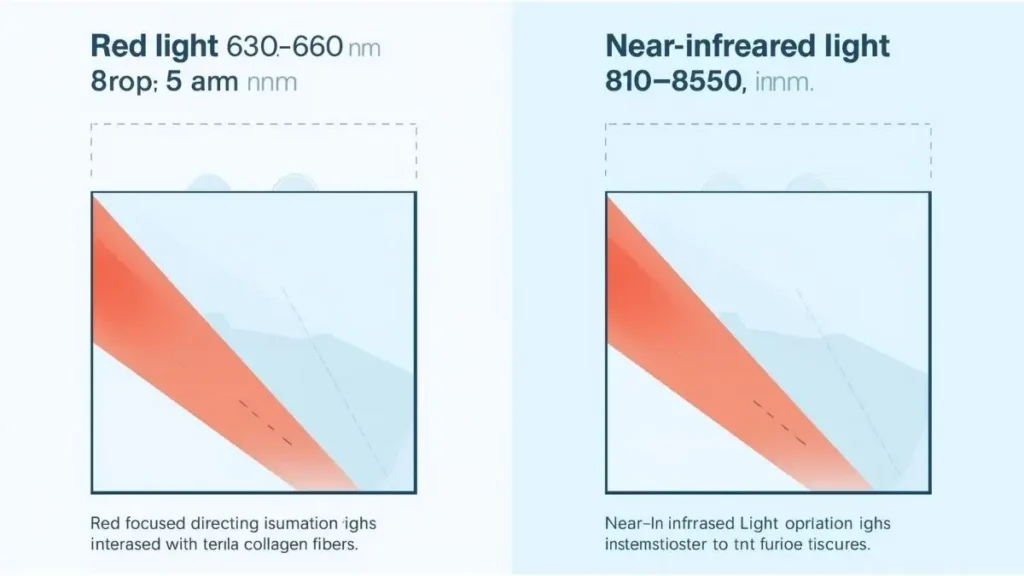
Red light (about 630–680 nm) works best at the skin level. It targets collagen and surface healing.
Near-infrared (810–850 nm) reaches deeper soft tissue and can help sore muscles and joints in the body.
Blue light and multi-color approaches
Blue light (≈415 nm) targets acne bacteria and is usually part of a targeted acne program, not a catch-all solution.
Multi-color systems can be handy if you want anti-aging and acne support without extra tools. But correct wavelengths, dosing, and consistency beat “more colors” marketing every time.
| Wavelength | Main benefit | Best product type |
|---|---|---|
| ~630–680 nm | Collagen support, skin texture | Face mask or panel |
| ~810–850 nm | Deeper tissue, muscles, joints | Panel or handheld |
| ~415 nm | Acne bacteria reduction, inflammation control | Targeted multi-mode mask or spot tool |
Benefits you may notice with consistent use
Consistent sessions tend to produce the clearest, most reliable wins people report. Small changes add up: better texture, calmer redness, and fewer days with soreness. Expect gradual progress over weeks to months.
Fine lines, wrinkles, and collagen-supporting routines
Many users see smoother skin and reduced fine lines over time. Collagen signaling improves slowly, so visible changes in lines often appear after regular routines.
Acne, redness, and calming inflammation
Combining blue modes with a red program can calm blemishes. People report less visible acne and reduced redness when inflammation is part of the picture.
“Evidence is strongest for skin health and wound healing support,” — experts note gradual gains with steady treatment.
Joint pain, muscle soreness, arthritis, and recovery support
Panels and near-infrared modes are commonly used on larger areas of the body to ease joint pain and muscle soreness. Improvements tend to be temporary and incremental; this is a complement, not a replacement, for medical care.
Hair growth support and scalp health
Early research suggests potential hair growth with cap-style options and months of consistent sessions. Match the tool to the area: a mask for facial skin, a panel for larger sections of the body, and a cap for full scalp consistency.
Safety essentials for at-home red light therapy
A few clear precautions cut the small but real risks tied to DIY light treatments. Follow simple steps each time and you keep sessions safe and effective.
Eye protection, inserts, and when to keep your eyes closed
Protect your eyes when the panel or mask sits close to your face. If a product includes built-in shields, use them. If it provides removable inserts, fit them before you turn the unit on.
If a mask leaves your eye openings exposed, closing your eyes is safer than assuming the beam is harmless.
Who should check with a dermatologist first
Pause and ask a clinician if you take photosensitizing medication, have a photosensitive condition like lupus, are treating active cancer areas, or are pregnant or breastfeeding. Experts advise consultation in these cases.
If you have complex medical history, speak with a dermatologist before starting regular sessions.
How burns happen and how to avoid overdoing treatment time
Burns and blisters usually come from too much exposure—long sessions, too close a distance, or falling asleep with the mask on. Don’t stack sessions back-to-back to speed results.
Treat dose as intensity plus treatment time. Use built-in timers or a phone timer when a product lacks one. That keeps you consistent without overdoing it.
Avoid treating irritated, infected, or freshly over-processed skin unless your dermatologist says it’s fine.
| Protection type | What it does | Example brands |
|---|---|---|
| Built-in shield | Full coverage, no extra parts to fit | Some panel masks |
| Removable eye inserts | Custom fit and replaceable; good for travel | CurrentBody, Qure |
| Plush silicone pads | Comfort and light blocking; doubles as cushion | Shark CryoGlow |
| No eye protection | Keep eyes closed or add your own shields | Omnilux Contour Face |
“When in doubt, protect your eyes and check with a dermatologist if you have any medical concerns.”
Device types you’ll see for home use and who they’re for
Pick the style that matches your goal and daily routine. Different form factors fit different needs: targeted facial work, broader body coverage, spot fixes, or scalp consistency. Below are the common options and when each makes sense.
Light therapy mask and LED face mask options for targeted facial concerns
If your priority is facial skin, a face mask is the easiest to repeat. Masks deliver consistent proximity and even coverage. They work well for fine lines, texture, and surface redness.
Panels for larger coverage on face and body
Panels cover more area with less repositioning. That makes them a go-to if you want soreness relief, recovery support, or multi-area sessions. They also tend to have stronger output than small gadgets.
Handheld device picks for spot treatments and travel
Choose a handheld device when you need precision or portability. These are ideal for pinpoint acne, a single joint, or taking on trips. They save space and work well if you don’t want a full setup.
Caps and wearable options for hair regrowth routines
Caps are the consistency-first choice for the scalp. Full-scalp coverage is hard with a wand, so caps make daily sessions simple and hands-free—key for long-term results.
Comfort and lifestyle matter. Hands-free designs, strap comfort, storage size, and whether you can multitask will determine whether you actually stick to a schedule. The best device is the one you will use regularly—not just the most hyped model online.
How to choose red light therapy devices for home use
A smart buy begins with clear wavelength numbers and realistic output at the distance you’ll sit. Start by matching wavelengths to your goals: about 630–660 nm for skin and 810–850 nm for deeper recovery.
Irradiance and dose: why measurement distance matters
Irradiance tells you how much energy reaches skin. Check the spec measured at a practical measurement distance—often 6–12 inches—because that’s how you’ll actually be using the product.
Dose equals irradiance multiplied by time. Two units can look bright but deliver different dose amounts if one is measured much closer than you’ll sit.
Coverage, beam angle, and repositioning
Look at coverage and beam angle to estimate how many passes a treatment will need. Narrow beams mean more repositioning and longer sessions.
Choose wider coverage if you want fewer adjustments and a simpler routine.
UX features that keep you consistent
Pick models with built-in timers, clear toggles between modes, and optional app control when the app actually simplifies settings.
Cooling or low-heat designs help if you’re prone to puffiness. Eye protection and easy straps increase the chance you’ll stick to a routine.
Build quality signals to watch
- Low flicker and transparent low EMF claims.
- Third-party safety certifications and clear warranty terms.
- Sturdy materials and a return policy that reflects brand confidence.
| Check | Why it matters | What to look for |
|---|---|---|
| Wavelengths | Matches treatment depth | ~630–660 nm and ~810–850 nm listed |
| Irradiance at distance | Real-world energy delivered | mW/cm² specified at 6–12 inches |
| UX & warranty | Keeps you consistent | Timers, toggles, cooling, clear warranty |
Bottom line: choose a model that fits your target area, shows irradiance at a realistic measurement distance, and has UX and build quality that you’ll actually use. That combination is what makes a routine stick and a treatment deliver results.
Our testing-inspired picks: the best face masks for fine lines and acne
Practical testing ruled: comfort, program length, and real specs beat hype. Below are masks that fit into real routines and deliver clear, comparable specs so you can pick what you’ll actually use.
Best overall: Shark CryoGlow LED Face Mask
Why it stands out: balanced wavelengths (415/630/830 nm), 480 LEDs, and 73 mW/cm² red irradiance make it versatile for fine lines and acne.
Includes plush silicone eye pads, multiple programs, and a remote with countdown. Downsides: fan noise, bulk, and whole-mask charging.
Best flexible pick: CurrentBody Skin LED Mask Series 2
Flexible fit, chin strap, and 633/830/1072 nm mix with 236 LEDs suit broader facial coverage. Protective eye inserts are included for safer sessions.
Fastest habit-builder: Qure Light Therapy Mask
Ultra-short sessions—three minutes—and app customization make it easy to stick with. Removable eye protection is offered, though the app has a brief learning curve.
Most comfortable flexible option: Omnilux Contour Face
Very flexible and comfortable with 633/830 nm but no built-in eye protection. Keep eyes closed during use and avoid multitasking.
Best splurge: Dr. Dennis Gross SpectraLite FaceWare Pro
FDA-cleared, multi-mode red + blue, and quick sessions make it a premium pick. It is heavier than most masks, so fit matters if you prefer a lighter option.
“Choose the mask that matches your routine—comfort and real specs determine whether you’ll keep going.”
Best budget-friendly light therapy mask options worth considering
If you want a wallet-friendly mask that still delivers measured results, start by checking wavelengths and session plans.

What budget should still include: correct wavelength ranges, clear instructions, a timer or auto shutoff, and enough build quality that you’ll keep using it.
iRestore Illumina Face Mask — FDA-cleared value
The iRestore Illumina is FDA-cleared and packs 360 LEDs with 635 nm + 830 nm and a 415 nm blue mode. It offers 10-minute sessions, three to five times per week, and a one-year warranty with IEC/ISO notes.
Who it fits: you want a structured program and multi-mode options without paying premium prices.
Skin Gym Wrinklit — entry-level experiment
The Wrinklit is very affordable and includes red, blue, and amber LEDs with built-in eye protection. Expect dimmer output and longer sessions — often 15–30 minutes per session.
If you can’t tolerate longer treatment times, a cheaper mask may cost you in consistency.
| Model | Wavelengths | Session plan | Notes |
|---|---|---|---|
| iRestore Illumina | 635 nm / 830 nm / 415 nm | 10 minutes, 3–5 times week | FDA-cleared, 360 LEDs, 1-yr warranty |
| Skin Gym Wrinklit | Red / Blue / Amber | 15–30 minutes, daily to alternate days | Affordable, dimmer output, built-in eye shields |
With budget options, consistency matters more than flashy specs. You’re often trading intensity for affordability.
Best red light panels for home use when you want more coverage
Panels give you broad coverage in one session, which matters when you treat larger areas or multiple family members.
Why choose a panel: they cut down repositioning and speed up treatment of torso, arms, and legs. A single 10–20 minute session can reach areas that would take many passes with a mask.
LightStim ProPanel — pro-grade output
LightStim ProPanel is an FDA-cleared, professional-grade option. People pick it for consistent output across a large head and models aimed at wrinkles, acne, or pain. Typical sessions run 10–20 minutes a few times weekly.
Fxtiaa LED Face/Body Panel — lounge-style, multi-color
The Fxtiaa panel is an overhead-style setup with many colors and a relaxed lounge approach. It suits you if you prefer to lie back and treat face, neck, and hands without wearing gear. It’s not travel-friendly.
Panel reality: plan where it lives, decide whether you’ll stand or recline, and rotate target areas to keep sessions practical.
| Model | Main use | Session length | Best fit |
|---|---|---|---|
| LightStim ProPanel | Wrinkles / acne / pain | 10–20 minutes | Efficiency, pro output |
| Fxtiaa LED Panel | Multi-color face & body | 10–20 minutes | Lounge comfort, multi-mode |
Quick rule: choose a panel if you value broad coverage and time savings; pick a mask if facial convenience matters most.
Best handheld red light therapy devices for targeted spots
Handheld units often win when you only need to fix a single stubborn spot. They save time and let you treat a patch without committing to a full-face session. That makes them ideal if you have a few acne marks, a small scar, or a sore joint.
LightStim for Wrinkles — fast, three minutes per area
LightStim for Wrinkles is FDA-cleared and built around a three minutes per area plan. Its short treatment time helps you add focused sessions to a busy day and repeat them consistently.
TheraFace Pro — multitasking with massage
TheraFace Pro pairs multi-spectrum light with percussive massage and several attachments. It’s a good pick when you want combined benefits, but session length is less prescriptive. Follow the maker’s guidance and track your own results.
When a handheld beats a mask
Choose a wand when you treat a handful of spots, travel often, or need precise placement on the face or a small joint. Portability is a real benefit.
Caution: handhelds increase the chance of user error in distance and coverage, so use a timer and a repeatable method to keep your treatment time consistent.
Best red light therapy device for hair growth at home
Scalp routines demand their own approach because coverage and daily consistency determine results. Hair changes move slowly, so you need a plan that is easy to stick with and gives even exposure across the scalp.
Capillus Pro Cap: full-scalp coverage in short sessions
Capillus Pro Cap is FDA-cleared and uses 272 medical-grade 650 nm lasers. It’s hands-free and designed for just 6 minutes per day, with a 3-year warranty. That short, repeatable session length makes it easier to keep a routine.
How often to run treatments and what progress looks like
Many hair tools are meant to be used multiple times per week or daily. In studies, consistent schedules over months produced measurable increases in hair count.
- Early: reduced shedding and fewer loose hairs.
- Months: gradual density and thicker-looking areas.
- Track progress with photos and a simple calendar.
Who it’s best for: choose this device if you will actually wear it regularly. If you skip sessions, it may end up unused. Pair treatments with a scalp-health plan and a dermatologist consult when needed.
Product spotlight: Shark CryoGlow specs that matter
Shark CryoGlow packs clear specs and UX choices that shape real-world results. Below is a short breakdown to help you decide if this mask fits your routine and goals.

Wavelengths and programs
The unit combines 415 nm (blue), 630 nm (red), and 830 nm (near‑infrared). That mix lets the antiaging program focus on collagen and repair (red + NIR) while the acne cycle adds blue to target bacteria and inflammation.
Built programs: 6‑minute antiaging, 8‑minute acne, 4‑minute maintenance, plus 5/10/15‑minute cooling modes with auto shutoff.
Irradiance and dose explained
The stated red irradiance is 73 mW/cm². In practice, that’s high for a facial mask and makes shorter sessions practical if you stick to the schedule.
Dose equals that irradiance multiplied by treatment minutes. The preset 4–8 minute programs help you avoid overexposure while hitting useful energy levels.
Fit, comfort, and eye protection
Plush silicone pads surround the eyes to block stray emission and improve comfort. The wired remote gives a visible countdown and pause, which helps you keep consistent treatments without guesstimates.
A stable fit also matters because even coverage depends on steady placement across the face.
Real-life downsides
- Fan noise can be noticeable during cooling cycles.
- The mask is relatively bulky to store compared with slimmer models.
- You must plug in or charge the whole mask rather than smaller modules.
“Practical strengths: measured output, clear programs, and built-in eye protection. Practical tradeoffs: noise, size, and charging design.”
How to use your device correctly for better results
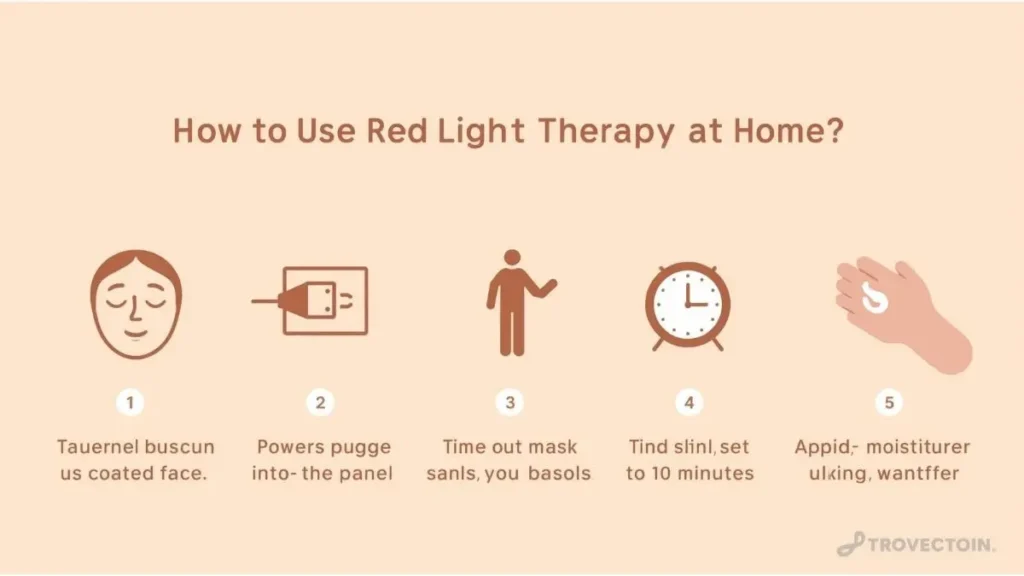
Small, regular sessions are the most reliable path to measurable improvement. Start with a plan you can keep. Many people begin at three to five times per week, then drop to fewer times week for maintenance once they see progress.
Frequency guidelines
Begin with three five times weekly if you want faster visible gains. After 6–12 weeks, reduce to two to three sessions weekly to maintain results.
Treatment time by device
Match session length to the tool: spot wands often need about three minutes per area. Structured masks commonly run six minutes. Flexible masks may ask for 10 minutes, and panels can run 10–20 minutes.
Distance, placement, and clean/dry skin prep
Always start with clean, dry skin. Remove makeup and sunscreen and avoid recent exfoliants. Follow the maker’s distance chart — dose drops fast with even a few inches of extra space.
Fitting into your routine with actives and sensitive skin
If you use strong actives or have dry skin, pause active serums before sessions. Use gentle moisturizers afterward and cut frequency if irritation appears.
Tracking changes and when to reassess
Take baseline photos and keep a short log of dates, minutes, and distance. Reassess after 6–12 weeks and adjust frequency or treatment time rather than increasing minutes blindly.
| Goal | Start frequency | Typical treatment time |
|---|---|---|
| Spot treatment | 3–5 times week | 3 minutes per area |
| Facial mask | 3–5 times week | 6–10 minutes |
| Panel for body | 3 times week | 10–20 minutes |
Affordable vs. premium devices: what you gain as you spend more
As you move up price tiers, expect upgrades that make treatments simpler and more reliable.
Entry-level masks and handhelds
Entry models suit beginners and small-area goals. They are often lightweight, cheaper, and easy to test.
Who they fit: you if you want to try sessions without a big commitment. Expect modest output and longer sessions.
Mid-range upgrades
Mid-tier gear raises real-world output and expands coverage. That means fewer passes and shorter routines.
Practical gains: clearer dose specs, better build, and timers that help you stay consistent.
Premium: coverage, durability, and features
Top-tier systems add broad coverage, stronger thermal management, and durable parts. UX touches—apps, toggles, and solid warranties—make it easier to keep a routine.
Value truth: a cheap option you never use costs more than a pricier model that fits your life.
Experts often point to FDA-cleared status as an extra filter when you want confidence in safety and evidence.
| Tier | Main benefit | Typical fit |
|---|---|---|
| Entry | Low cost, spot access | Masks and handheld device for small areas |
| Mid-range | Stronger dose, less repositioning | Compact panels, better timers |
| Premium | Broad coverage, durability, advanced UX | Large panels, full systems, warranties |
Buying tips for the US: warranties, returns, and HSA/FSA eligibility
Before you buy, check support terms so a small flaw doesn’t become a long-term headache. Warranty length, return windows, and clear customer support make a big difference when a product fails or doesn’t fit your routine.
How HSA/FSA coverage works with a letter of medical necessity
Many purchases can be paid with HSA/FSA dollars only when a clinician documents medical need. That usually means a letter of medical necessity (LMN).
- What an LMN typically includes: diagnosis, the device type, intended purpose, and recommended frequency/duration plus clinician signature.
- Keep receipts and the LMN—your plan administrator may request proof.
What to look for in return policies and long-term support
Look for a clear return policy that lets you test comfort and fit. Masks and wearable gear often fail on comfort, not specs.
Example: Shark CryoGlow lists a 60-day return policy and a 2-year warranty, which is a helpful benchmark when you compare sellers.
| Check | Why it matters | Target |
|---|---|---|
| Warranty | Covers defects and parts | 1–2+ years |
| Return policy | Lets you test fit and comfort | 30–60 days |
| HSA/FSA rules | Reduces out-of-pocket cost with LMN | Plan approval required |
Keep documentation, ask how repairs are handled, and verify whether your plan will accept an LMN before purchasing.
Common mistakes that slow your progress
Small errors in buying or daily habits are often why people stop seeing gains. Fixing a few basics usually restores steady improvement without extra expense or time.
Chasing max power instead of the right dose
Buying the highest wattage or the biggest spec sounds smart, but it misses the point. What matters is a repeatable dose that matches the maker’s guidance.
Overexposure or stacking sessions to “speed results” can irritate skin and cause burns. Stick to the advised session time and distance instead.
Skipping eye protection or ignoring instructions
Never skip the safety steps. Proper eye protection and the product instructions exist to prevent discomfort and harm.
Close your eyes if a mask lacks shields and follow placement charts to avoid hotspots near sensitive areas.
Inconsistent use and expecting dramatic overnight changes
Inconsistent use—doing many sessions one week then none the next—will slow or erase gains. Visible results usually take weeks to months.
A better plan: pick a schedule you can keep, use timers, and track sessions. Reassess at set checkpoints rather than extending time impulsively.
“Consistent, measured treatment beats sporadic high-power sessions every time.”
- Choose a manageable schedule and stick to it.
- Use a timer and follow distance charts.
- Log sessions and review after 6–12 weeks.
Conclusion
The best outcome starts with picking a model that fits your life and target area. Match a mask to facial concerns, a panel to broad body coverage, a handheld for spot work, and a cap for full-scalp plans.
Focus on consistency over intensity. Regular sessions move the needle over weeks, not overnight. Stick to recommended session time and distance to avoid irritation.
Prioritize safety: use eye protection, follow placement guidance, and don’t stack treatments when you’re eager to speed results.
Next step: pick one category, commit to a realistic weekly routine, and track progress with photos. If you have medical issues, photosensitizing meds, or complex concerns, loop in a clinician before you start using a new red light therapy device.
FAQ
What can you realistically expect from at-home red light treatments for skin and pain?
How often should you use a mask, panel, or handheld device each week?
How long should each treatment last?
Do you need eye protection when using a face mask or panel?
Can multi-light products with blue wavelengths help acne?
What wavelengths should you look for when choosing a device?
How far should the device be from your skin, and why does distance matter?
Can you use light sessions with active skincare ingredients like retinol or acids?
Who should check with a dermatologist or clinician before starting?
How do burns happen and how can you avoid overdoing sessions?
When is a handheld device better than a mask or panel?
How many times per week should you use a hair-growth cap and when will you see progress?
What UX features matter when picking a unit so you’ll stick to a routine?
Can you combine treatments — like a mask and a panel — on the same day?
Are premium units worth the higher price?
What should you check in US warranties and return policies?
Disclosure: We independently research and test products. If you purchase through our links, we may earn a small commission at no extra cost to you. This supports our work.

Igor Silva is the founder of CNF Products Offer, where he researches and reviews everyday products to help smart buyers cut through the noise of fake reviews and overhyped gadgets. Based in Rio de Janeiro, Brazil, Igor focuses on honest insights, real-world value, and verified deals—so you spend less time searching and more time enjoying what actually works.