
Ready to change your room’s vibe in seconds? You can pick bulbs that give voice control, schedules, and color tuning without extra gear. This guide focuses on easy setups and practical results so you start using voice and apps fast.
Expect clarity up front: we explain the “no hub” promise, which usually means direct Wi‑Fi bulbs or devices that pair with an Echo’s built‑in radio. You’ll see top tested picks like WiZ Color and Philips Hue White and Color Ambiance, with notes on when a bridge makes sense.
We’ll preview quick picks, then short mini‑reviews by use case: budget color, Apple Home flexibility, max brightness, low‑dim comfort, multi‑bulb rooms, and premium ecosystems. You’ll learn how to choose by brightness, color temp, shape, fixture fit, and connectivity.
Setup is simple: install the bulb, pair in the brand app, then enable the skill in the Alexa app. Later sections cover common voice commands, privacy tips, and how to protect your accounts while you enjoy smart home lighting options.
Key Takeaways
- Look for direct Wi‑Fi or Echo‑compatible bulbs to avoid extra hardware.
- Top picks include WiZ Color and Philips Hue (Hue often uses a bridge).
- Choose bulbs by brightness, color temp, and fixture fit for each room.
- Alexa voice control handles on/off, dimming, scenes, and color tuning.
- Setup: install, pair in the app, then enable in Alexa for voice use.
What “No Hub” Alexa Smart Bulbs Really Mean in Your Smart Home
The connection method matters—here’s how direct router links differ from hub systems.
Plain definition: a “no hub” setup means the bulb connects straight to your Wi‑Fi, so you skip extra bridge hardware and get running faster.
Contrast: hub-based systems like philips hue usually rely on a bridge or starter kit for local control and richer features. A bridge can speed up responses and unlock deeper automations, but it adds cost and another device to manage.
“Some Echo models include a Zigbee radio and can act like a mini hub for compatible devices.”
Keep this in mind: a regular Echo Dot won’t replace every bridge. If you want the easiest, cheapest option, pick direct-connect smart bulbs. If you want the broadest ecosystem and the philips hue experience, consider a kit with the bridge.
- Trade-offs: Wi‑Fi range, router congestion, and feature depth vary by brand.
- Placement matters: distant rooms and covered outdoor fixtures stress connectivity most.
Quick Picks for the Best Alexa-Compatible Smart Bulbs Right Now
If you want one fast buy, these three tested options cover most rooms and set you up quickly.
Best overall value: WiZ 60W A19 Color
Why buy: wide color range, strong real-room light spread (lux), and plenty of built-in scenes.
No hub required: direct Wi‑Fi pairing makes setup fast and easy.
Best for Apple Home flexibility: Meross MSL120
Why buy: even light across top and sides and native Apple Home support for controls outside the brand app.
No hub required: dependable pairing to your network for quick voice and app access.
Best for maximum brightness: GE Cync Full Color Direct Connect (A21)
Why buy: 1,600-lumen class output is ideal for kitchens and offices, plus dynamic presets like Candle and Party Time.
Note: check the bulb size before you order — the A21 may not fit smaller fixtures.
“If you buy only one, pick the WiZ for balance; choose GE Cync when raw brightness matters.”
- Fast shopping: pick one and install—then enable the brand skill for alexa voice control.
- Next: deeper reviews for low-dim comfort, multi-bulb range, and a Hue comparison.
Buying Guide for smart led bulbs that work with alexa no hub
Start here: simple buying rules to pick the right brightness, color, and size for each space.
Brightness basics: understanding lumens
Quick lumen cheat sheet: 40W ≈ 450 lumens, 60W ≈ 800 lumens, 75W ≈ 1,100 lumens, 100W ≈ 1,600 lumens.
This helps you match new bulbs to the old incandescent feel. A bedside lamp needs far fewer lumens than a kitchen island or home office.
Color temperature and white light quality
Warm vs. cool: warm white feels cozy, cool white helps focus. Adjustable color temperature lets you change mood across the day.
Full color vs. white color ambiance
Full color is fun for parties and accents. Most days you’ll use warm-to-cool white color ambiance for reading, relaxing, or work.
Bulb sizes and fixture fit
A19 fits most lamps; A21 is bigger and brighter but may not fit shades or recessed fixtures. Check physical size before you buy.
Location and compatibility checks
Enclosed fixtures, damp baths, and outdoor covered spots often need specific ratings. Always check the product listing for enclosed or wet-location compatibility.
Connectivity options
Direct Wi‑Fi is easiest. Mesh Wi‑Fi or Thread gives steadier range in larger homes. Zigbee can extend reach but sometimes changes the practical “no hub” setup.
| Watt Equivalent | Lumens | Best Rooms | Notes |
|---|---|---|---|
| 40W | 450 lm | Bedside, hall | Cozy, low task lighting |
| 60W | 800 lm | Living room, lamps | All‑purpose ambient light |
| 75W | 1,100 lm | Dining, small offices | Good balance of task and ambient |
| 100W | 1,600 lm | Kitchen, workshop | High task brightness; check fixture size |
Best Budget-Friendly Color Bulb With Alexa Voice Control: WiZ Color and White Smart Bulb
A wallet-friendly color option delivers strong performance and easy voice integration for everyday use.
Why buy: the WiZ 60W A19 Color smart bulb gave strong lux at multiple levels in testing. It offers a wide warm-to-cool white range plus 16 million colors for mood and task lighting.
Scenes, schedules, and integrations that feel built-in
Ready-to-use scenes are included, so you get good presets without extra setup. Schedules and integrations sync cleanly, so routines run reliably in the background.
Wide white range plus full color control
The white color tuning keeps everyday lighting natural. Color options add party or accent modes while preserving consistent output at common brightness levels.
Setup and daily wins
Complete the setup in the WiZ app first, then link it to your Alexa for voice and routines. You get easy dimming, quick scene changes, and a circadian mode to shift whites across the day.
| Feature | Performance | Practical Use |
|---|---|---|
| Brightness (lux) | Strong across levels | Living rooms, desks |
| Color range | 16M colors | Parties, accents |
| White tuning | Wide warm-to-cool | Reading to evening wind-down |
Best for Balanced Light Spread in Any Fixture: Meross MSL120 Smart Wi‑Fi LED Bulb
The Meross MSL120 is built to deliver even room glow instead of a single bright hotspot. You’ll notice consistent lux between the top and sides, which matters in table lamps, floor lamps, and open fixtures.
Why even spread matters: side spill fills corners and reduces harsh contrasts under shades. That makes reading and conversation areas feel more natural.
Consistent output and fast response
The bulb shows balanced output across angles, so you won’t get a harsh bright spot with dim sides. It also reacts quickly to automations and everyday alexa voice commands for on/off, dim, and brightness levels.
Mix-and-match friendly
This option supports Apple Home natively, so you can use other ecosystems without forcing a single app. It’s a good pick for living spaces where comfort and consistent lighting beat max lumens.
| Feature | Performance | Best fixtures |
|---|---|---|
| Light spread | Very even top & sides | Table lamps, open pendants |
| Response | Fast in automations | Daily routines, dimming |
| Integration | Alexa and Apple Home | Mixed-ecosystem homes |
Best for Very Bright Rooms and Task Lighting: GE Cync Full Color Direct Connect
If you need a serious brightness upgrade for an office, kitchen, or big living space, the GE Cync A21 is built for heavy-duty light. It hit top scores at full output among 1,600‑lumen class options and spreads light well across the top and sides.
When an A21 is the right upgrade for your work zones
Choose an A21 for larger rooms, high ceilings, or task zones like prep counters and desks. The extra lumen output helps with reading, cooking, and detailed projects without forcing you into harsh glare.
Dynamic presets and quick scenes
Built-in scenes such as Candle and Party Time let you change mood instantly. Scheduling and color presets mean you get useful features without building scenes from scratch.
Fit check and a simple pre-buy checklist
- Measure shade clearance and socket space before you buy.
- Decide if you want bright everyday whites or mostly color accents.
- Confirm the A21 will clear globes, shades, and compact fixtures.
- Enjoy direct-connect convenience—no extra bridge required for typical home setups.
Best for Keeping Brightness at Low Dims: RCA Smart Wi‑Fi A19 LED Bulb
Low-dim performance changes how a bedroom feels after lights-out. Many bulbs fall off at 10% and leave you squinting or in near-darkness. The RCA A19 keeps usable lux at low settings so your space stays gently visible.
Why lux at 10% brightness matters for evenings and bedrooms
You want enough light to move safely without waking others. The RCA bulb holds lumen output better than many competitors at 10% brightness, making late-night checks and wind-down reading practical.
Simple app controls for quick changes without digging through menus
The app is uncluttered. You can adjust brightness, pick a white light temperature, or enable a scene in two taps.
- Real routines: hallway night lights, nursery checks, and calm reading levels.
- Key features: schedules, timers, simple scenes, and music syncing.
- Alexa-friendly: voice dimming to a specific percent fits bedtime routines.
Best for Multi-Bulb Coverage in Larger Homes: U-tec Bright A19 1100LM
Large homes expose weak Wi‑Fi spots; a multi-bulb mesh can help fill them in. The U-tec Bright A19 1100LM uses mesh behavior so each unit strengthens the network path. That makes distant devices more reliable and easier to control.
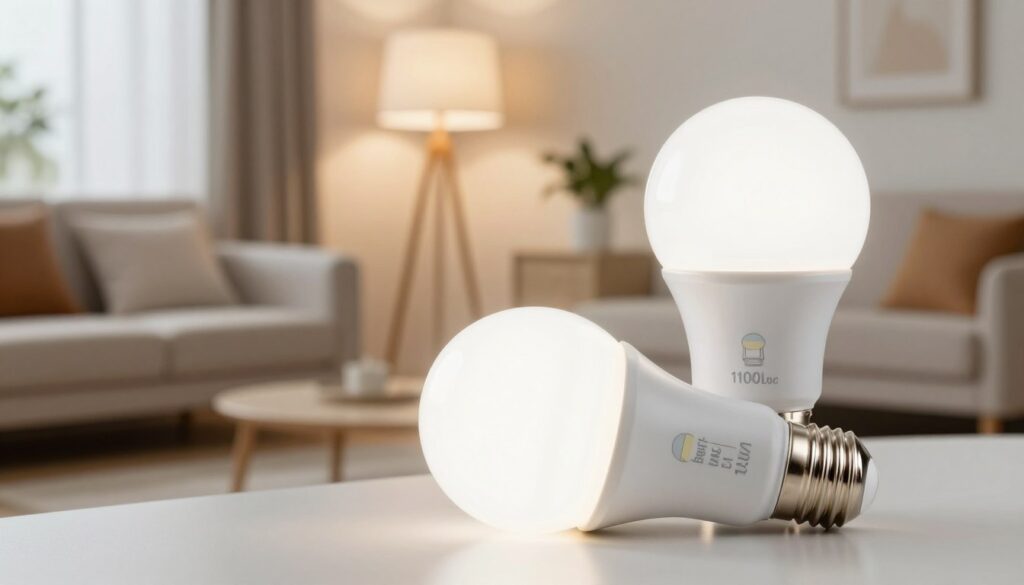
How mesh Wi‑Fi improves reliability when bulbs are far from your router
Plainly put: every additional bulb can act like a relay. Instead of each bulb fighting back to the router, they pass commands along a web of links. This reduces dropouts in upstairs bedrooms, basements, and detached garages.
When you’ll feel the difference in responsiveness and stability
Day-to-day wins include faster responses, fewer “device unresponsive” notices, and steadier group commands. The 1,100‑lumen output also delivers strong light for general rooms, so coverage and brightness come together.
- Better range in long or multi-floor layouts.
- Improved reliability over single-router setups.
- Minor app UI quirks exist, but voice control and steady connections are the main gains.
Best Premium Pick for Color Accuracy and Ecosystem Depth: Philips Hue White and Color Ambiance
If color fidelity and a mature app matter to you, Philips Hue White and Color Ambiance is the premium benchmark.
Why Hue still leads: philips hue delivers consistent, vibrant color ambiance and refined scene controls. You get calibrated colors across multiple bulbs, and the app feels polished for daily routines.
What you pay for: stable white light performance, deep color range, and an ecosystem that grows without surprises. The scene library and third‑party integrations are notably mature.
Starter kit value: a philips hue starter kit typically includes multiple bulbs plus the Hue Bridge. The bridge improves responsiveness and unlocks advanced automations across rooms.
“A bridge can make large installs feel snappier and more reliable.”
Important note: philips hue white color offerings usually rely on the Hue Bridge, so this is not a pure no‑bridge option. Still, if you want long‑term expandability and the best scene polish, hue is worth considering.
Buying tip: start with a starter kit to test color ambiance and controls before expanding your lights across the home.
Best Hue Alternatives When You Want White Color Ambiance Without the Hue Bridge
If you want warm-to-cool whites and usable presets without buying into a full ecosystem, you have good direct-Wi‑Fi options.
How many ways bulbs copy the Hue white tuning
Many brands offer tunable white temperature and built-in scenes that mimic the hue white experience. They shift from warm to cool so your white light matches tasks and evening wind-downs.
Pick the right tier for your needs
White-only: fixed warmth, lowest cost. Good for basic lamps.
White ambiance: warm-to-cool color temperature control — the closest to hue white for everyday use.
Full color: adds color scenes for parties and accents, on top of white tuning.
When Hue-like scenes are enough
Most people use white tuning daily and color rarely. If you don’t need deep ecosystem controls, a strong Wi‑Fi bulb with wide white color ambiance and ready scenes is the best value.
“You can get the Hue feel without the Hue price by choosing bulbs with wide white ranges and solid presets.”
- Simple rule: buy white ambiance for daily flexibility.
- Expect good presets, but not the full philips hue ecosystem polish.
Alexa Voice Features You’ll Use Most With Smart Bulbs
Voice control is where smart lighting goes from neat to everyday helpful. You’ll end up using a few core commands for most tasks, and they make routines smoother in your home.
On/off, dimming, and fast brightness changes
You’ll say simple phrases like “turn on the living room” or “set lamp to 30%.” These basic controls feel instant when bulbs respond quickly.
Why it matters: consistent response time keeps group commands from lagging and makes dimming feel natural.
Temperature shifts for focus and relaxation
Use cooler whites for work and warmer whites for evenings. Changing color temperature helps you switch tasks without changing fixtures.
Include temperature changes in a routine and you’ll see the difference at bedtime or during movie prep.
Scenes and presets for movie night, dinner, and parties
Scenes save time. One command can set color, brightness, and presets for an instant mood change.
Common scenes: movie dim, dinner warm, and party colors. They beat manual tweaking every time.
Grouping lights by room so commands make sense
Name bulbs and group them by room. Then say, “turn off the living room lights” and everything reacts cleanly.
Routines let one phrase trigger multiple actions, like a bedtime routine that dims and then turns off lights.
| Action | Example Command | Best Use |
|---|---|---|
| On/Off | “Alexa, turn on living room” | Daily entry/exit |
| Dimming / Brightness | “Set kitchen to 70% brightness” | Task lighting and evenings |
| Color / Temperature | “Set lamp to warm white” / “Set color to blue” | Focus, relax, or mood scenes |
| Scenes / Routines | “Alexa, movie night” | Multi-light setups and automation |
Setup Walkthrough: Getting Your Smart Bulb Working With Alexa (No Hub)
Follow this simple order to get your new bulb talking to Alexa in minutes.
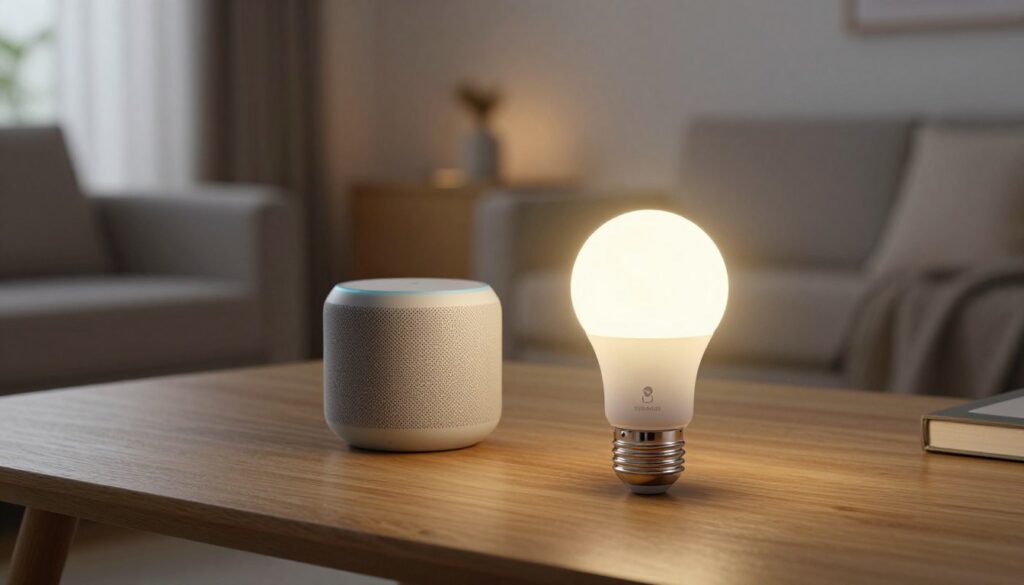
Install first, then link. Screw in the bulb, open the companion app, and complete the initial pairing. The brand app saves your Wi‑Fi credentials and checks firmware before Alexa can see the device.
Add the integration in the Alexa app
Open the Alexa app, enable the brand skill or integration, then discover devices. Assign each bulb to a room so voice commands match the right lights.
Name bulbs for clean voice controls
Use short, room-first names like “Living Lamp” or “Kitchen Main.” Clear names reduce misfires and make group controls easier during routines.
Troubleshooting common setup issues
Check the Wi‑Fi band — many bulbs prefer 2.4 GHz. Confirm the bulb is in range of your router and update firmware if connectivity drops. For better reliability, place mesh nodes well, avoid crowded outlets near metal, and keep apps updated.
Choosing the Right Bulb for Your Fixtures, Rooms, and Lighting Goals
Match each room to the bulb purposefully. Pick by task, not by trend. That keeps your home feeling planned and practical.
Bedrooms: warm white light, low-dim performance, and schedules
For bedrooms choose a bulb with warm white light and good low-dim lux. This keeps late-night checks easy and prevents harsh glare.
Tip: look for reliable dim performance and scheduling so lights fade for bedtime and rise for mornings.
Living rooms: color ambiance and scene switching
In living spaces favor color ambiance and quick scene switching. Scenes let you move from movie mode to bright family time in one command.
Pick bulbs that shift temperature and color smoothly for better mood control.
Kitchens and offices: high lumens and comfortable cool whites
Task areas need higher lumens and cool white tones to improve focus without feeling clinical. Aim for the lumen targets in the table below.
Recessed and specialty fixtures: when you need a different bulb shape
Before you buy, confirm fixture depth and shade clearance. An A21 may be brighter but might not fit your recessed cans.
Quick rule: turn specs into room decisions—match lumens and color temperature to the way you use each space.
| Room | Lumens target | Color / Temp | Fixture note |
|---|---|---|---|
| Bedroom | 400–800 lm | Warm white, good low-dim | A19 fits most lamps |
| Living room | 800–1,100 lm | Color ambiance & tunable white | Use matching bulbs for scenes |
| Kitchen / Office | 1,100–1,600 lm | Cool white for focus | Check A21 fit for fixtures |
- Choose bulbs that stay reliable in distant rooms if you prefer a direct router connection.
- Buy by fitting and function, not just brand—this saves replacements and frustration.
Privacy and Security Tips for Alexa Smart Lighting at Home
Connected lights link to accounts, so securing those accounts is your first line of defense. An exposed login can give outsiders control of your lights and linked features. Treat lighting accounts like banking logins: protect them well.
Two-factor authentication and account protection
Enable two-factor authentication wherever the bulb brand or app offers it. A second verification step stops most casual attackers even if a password is stolen.
Strong, unique passwords for each smart home app
Use a password manager to create and store long, unique passwords for each smart home account. Reusing a single password can let one breach expose multiple services.
Managing Alexa voice recordings and mic settings
Control voice data: review and delete Alexa voice recordings regularly. If you want no voice capture, mute the Echo mic when you don’t need hands-free controls.
- Keep firmware and apps up to date so security patches reach your bulb and router.
- Limit third-party skills and revoke access you no longer use.
- Use strong home Wi‑Fi encryption and a separate guest network for visitors.
“Account security is the main defense for internet-connected lighting.”
Quick habit: check passwords, enable 2FA, and update apps monthly. These small steps keep your home light controls safe and private.
How We Picked These Bulbs Based on Real-Home Testing and Performance
We tested each option in real rooms and everyday fixtures to find what you’ll actually notice in daily use.
Testing in lamps and multiple fixtures for real-world use
We installed bulbs in table lamps, floor lamps, pendant fixtures, and recessed cans. This shows whether a bulb throws even light or makes dark spots under shades.
Why it matters: a bulb that looks bright on paper can leave dead zones in a lamp or glare in a pendant. Fixture-based testing reveals those real differences fast.
Measuring responsiveness in apps and using Alexa voice controls
We ran the companion apps on iOS and Android and timed response to voice commands. Fast response makes daily routines feel natural.
Editors and a writer on the team repeated common commands to check consistency and latency. Poor response turns a neat feature into an annoyance.
Why lux readings, color range, and scene quality influenced our picks
We logged lux at full and low dim levels. Bright kitchens need high lumens; bedrooms need usable light at 10%.
Color and scenes were judged for vibrancy and usefulness. Scenes should look intentional, not gimmicky. Brands like WiZ, Meross, RCA, U‑tec, and GE Cync showed specific strengths: sustained lux at low dims, even top/side spread, mesh stability, and raw brightness.
- Real fixtures over spec sheets: we prioritized how lights behave in your home.
- App + voice checks: both interfaces must be reliable.
- Measured results: lux, color range, and scene quality drove final choices.
Conclusion
Make the final pick by pairing a bulb’s features to how you use each room. Pick white, white ambiance, or full color, match lumens to the space, and confirm fixture fit before you order.
Top practical picks: WiZ delivers value, scenes, and a wide white range. Meross gives even light spread and Apple Home flexibility. GE Cync A21 wins for raw brightness and presets. RCA helps low-dim comfort, and U‑tec improves multi-room coverage.
Remember: philips hue and the Hue starter kit are premium for color and ecosystem depth, but they usually need a bridge. For the fastest setup, finish the companion app pairing first, then enable the alexa voice integration, name rooms, and group lights for smooth controls.
Quick nudge: prioritize reliability and fit over features. The best lighting is the lighting you actually use every day.
FAQ
What does “no hub” mean for Alexa-compatible bulbs?
“No hub” means the bulb connects directly to your home network or Echo device without requiring a separate bridge. You’ll install the bulb, set it up in the manufacturer’s app, then link that app to Alexa (or enable the brand’s Alexa skill). This skips buying extra hardware like the Philips Hue Bridge, though some advanced features may be limited compared to a hub-based system.
How do direct Wi‑Fi bulbs compare to hub-based systems like Philips Hue?
Direct Wi‑Fi bulbs are simpler to set up and avoid extra cost for a bridge. They often handle basic controls, scenes, and voice commands well. Hub-based systems such as Philips Hue usually offer tighter mesh networking, faster local control, more advanced routines, and deeper ecosystem integrations. Choose direct Wi‑Fi for convenience and Hue for long-term expandability and color accuracy.
Can an Echo device ever replace a hub?
Some Echo devices with Zigbee or Thread radios can act as a bridge for compatible bulbs, effectively replacing a separate hub. Check the Echo model—only certain Echo Plus or newer Echo devices include those radios. Otherwise, you’ll rely on Wi‑Fi bulbs that talk through their own apps and Alexa skills.
What trade-offs should I expect in range, reliability, and features?
Expect pros and cons: Wi‑Fi bulbs can suffer if your router’s range is limited or congested, affecting reliability. Hub systems use mesh networks (Zigbee/Thread) that often extend range and reduce lag. Feature-wise, hubs tend to support more robust scenes, routines, and third-party integrations. For many rooms, modern Wi‑Fi bulbs are perfectly adequate.
Which bulbs give the best value and compatibility for most homes?
Look for brands offering reliable white color ambiance and full-color options with solid app support. Value picks usually balance brightness, color range, and price. Products like WiZ or Meross often appear as good compromises between cost and Alexa voice control without a bridge.
How do I choose the right brightness for fixtures and rooms?
Use lumens instead of watt equivalents: roughly 450 lm for 40W, 800 lm for 60W, 1100 lm for 75W, and 1600 lm for 100W. Consider fixture size and ceiling height—larger rooms need higher lumens or multiple bulbs. For task areas like kitchens, choose higher lumens and a cooler white temperature.
What’s the difference between white color ambiance and full color bulbs?
White color ambiance bulbs let you tune color temperature from warm to cool whites, ideal for routines and focus. Full color bulbs add millions of colors for scenes and mood lighting. If you mainly want tunable white light for daily tasks and sleep-friendly evenings, ambiance bulbs may suffice.
Which bulb shapes should I pick for recessed or specialty fixtures?
A19 is the standard household shape that fits most lamps and fixtures. A21 offers larger coverage and higher lumens for bright rooms. For recessed cans or enclosed fixtures, verify the bulb’s rated shape and heat tolerance to ensure safe, even light spread.
Are Wi‑Fi bulbs suitable for outdoor or humid areas?
Only install bulbs rated for outdoor or damp locations in those settings. Indoor-only bulbs can fail or pose hazards outdoors. Look for IP ratings or manufacturer guidance for enclosed fixtures, covered porches, and bathrooms.
Should I choose Wi‑Fi, mesh Wi‑Fi, or Zigbee/Thread connectivity?
Choose Wi‑Fi for easy setup and single-device control. Mesh Wi‑Fi helps when your home has dead zones—mesh routers extend reliable coverage. Zigbee/Thread via a hub or compatible Echo gives better local responsiveness and larger multi-bulb stability. Match choice to home size and how many lights you plan to deploy.
How do I set up Alexa voice control after installing the bulb?
First, install and pair the bulb in its companion app. Then open the Alexa app, enable the brand’s skill or link the account, discover devices, and assign bulbs to rooms. Name bulbs with clear, simple labels so your voice commands work smoothly.
What troubleshooting steps help when bulbs don’t appear in Alexa?
Check your Wi‑Fi band (2.4 GHz is often required), ensure the router range reaches the bulb, confirm firmware is current, and restart the bulb, router, and Echo if needed. Also verify the brand skill is linked and that the bulb was added to the correct account.
How do scenes, schedules, and presets enhance daily routines?
Scenes let you recall grouped colors or temperatures for activities like movie night or dinner. Schedules automate wake-up and bedtime lighting. Presets and routines save time and make voice commands more natural, so your lights shift automatically for focus, relaxation, or entertaining.
Will a Wi‑Fi bulb provide the same color accuracy as Philips Hue?
Many Wi‑Fi bulbs offer good color ranges, but Philips Hue still leads in color fidelity and consistent color across models. If precise color matching is critical—for media rooms or design work—Hue’s ecosystem remains the top choice, though it usually requires the Hue Bridge.
How do I protect privacy and secure my lighting system?
Use strong, unique passwords for each smart home account and enable two‑factor authentication where available. Keep apps and firmware up to date, and review Alexa voice recordings and mic settings periodically to control data and privacy preferences.
Can multi-bulb setups improve reliability in larger homes?
Yes. Mesh-based bulbs or mesh Wi‑Fi systems distribute network load and reduce dead zones. In larger homes, choose bulbs and routers that support mesh networking or consider Zigbee/Thread setups for more consistent responsiveness across many fixtures.
What should I check before buying a bulb for a bedroom or living room?
For bedrooms, prioritize low-dim performance, warm whites, and quiet app control. For living rooms, look for color ambiance, even light spread, and scene switching. Always verify bulb size, lumens, and dimming range to match your fixture and mood goals.

About the Author
Igor Silva is the founder of CNF Products Offer, where he researches, tests, and shares honest recommendations on everyday products—from non-toxic kitchen tools to smart gadgets for small apartments.
Based in São Paulo, Brazil, Igor believes that living well in a compact space doesn’t mean compromising on safety, functionality, or style. His mission is to cut through fake reviews and overpriced hype by highlighting only verified, affordable, and truly useful options.
When he’s not testing cordless drills or comparing cloud storage plans, you’ll find him organizing kitchen drawers or planning his next tiny-office upgrade.