
Ready to upgrade your desk without a big spend? You can make real gains with a few compact picks from 2024 lists. Small tools cut clutter, keep essentials within reach, and free usable surface so your workflow feels calmer.
Think practical fixes: a dual folding phone stand, a slim desktop whiteboard, a tiny vacuum for crumbs, magnetic cord holders, outlet concealers, and an AeroPress for better breaks. These items cost around what real shoppers paid this year and solve daily annoyances.
Beyond tiny items, this approach is about design that clears visual noise and makes reset-up fast. You’ll see categories for organization, phone stands, cable management, power and charging, lighting, ergonomics, productivity tools, and comfort. Each pick includes placement advice so your workspace looks intentional, not improvised.
Key Takeaways
- You can improve your desk for less than many expect with targeted buys.
- Small products fix big daily annoyances like loose cables and crumbs.
- Good design frees usable surface and reduces visual clutter.
- Previewed categories help you jump to the fixes you need most.
- Expect practical placement tips for desktop, drawer, and behind-desk items.
- Examples and price points reflect 2024 gadget roundups for real-world credibility.
Why small, affordable gadgets make a big difference in your home office
Small, smart tools change how your desk behaves, cutting friction and freeing usable area. They don’t need to be fancy — a folding stand, a clip-on light, or a slim tray can alter daily flow.
What “space” really means for your desk, drawer, and room
Define it simply: fewer items living on the surface, more that fold, clip, or tuck into a drawer, and better use of vertical zones. That approach creates visible room and makes cleaning fast.
How to prioritize work, storage, and comfort on a tight budget
- Protect your work first: keep input devices, screen, and call gear accessible.
- Add storage next: trays, small bins, and smart hooks keep cords and notes off the desk.
- Layer comfort last: a compact wrist rest or lamp improves productivity without stealing real estate.
Think system, not clutter: a $10–$30 fix can save minutes every day and protect your health and environment by reducing strain and stress.
How we picked these space-saving gadgets under $35
Selection focused on tools that shrink what sits on your desk while boosting function. We used three simple filters so each pick earns its place.
Compact footprint and easy storage
Compact footprint means foldable stands, slim organizers, and things that tuck into a small drawer. If an item needs a dedicated shelf, it fails this test.
Real-world usefulness for work-from-home days
“If it doesn’t speed a common task, it doesn’t make the cut.” That rule covers video calls, charging, quick notes, and staying focused without turning your desk into a storage unit.
Value, durability, and setup time
We favored items that work in minutes, survive daily handling, and offer long life. You want a thing that you can wipe down, fold, or toss into a bag without worry.
- Must save space, reduce clutter, or speed a task.
- Easy setup — minutes, not hours; no permanent mounts for renters.
- Comfort gains only if they don’t crowd the typing area.
- Each choice helps you reset the desk quickly so your home office looks ready for the next work day.
“Practical, durable, and fast to set up — that’s how a useful pick earns a spot.”
Best space-saving home office gadgets under 35 for a cleaner workspace
Skip the overhaul: four simple buys restore order and free useful surface right away.
Dual folding cell phone stand for hands-free calls and compact storage
Why it matters: a Nulaxy dual folding stand ($10) replaces a stack of books and keeps your phone at a readable angle. It folds flat when you need the desk clear.
Hands-free calls feel better, your posture improves, and your screen is easy to glance at during work or video chat.
Glass desktop whiteboard for quick notes without paper clutter
The TSJ glass desktop whiteboard ($29) gives you a wipeable surface for short to-dos and priorities. It stops sticky notes from spreading across your monitor and keeps the desktop tidy.
Desktop vacuum cleaner for keyboard crumbs and tight corners
An Odistar palm vacuum (~$13) cleans crumbs and dust from a keyboard and tight desk edges fast. It’s an underrated thing that helps your setup look photo-ready and stays ready in a drawer.
Magnetic cord holder to stop cables from sliding behind your desk
The Smartish magnetic cord holder (~$30) keeps your most-used cables anchored at the edge of the desk. That small change makes charging frictionless instead of annoying.
Buying tips: favor foldable stands, wipeable surfaces, and designs that store flat or stand stable without wobble. These four picks deliver quick wins you’ll notice every day.
Desk organization solutions that free up space fast
The fastest way to free desktop room is to separate daily gear from stored extras. Decide what you touch every day and give those items a visible spot. Put everything else into a designated storage place.
Desktop organizers vs. drawer solutions for small desks
Desktop organizers give you immediate access to pens, sticky notes, and chargers. They are visible, so they remind you what you have.
Drawer solutions hide clutter and clear the surface, but they work only if you keep a routine. A single labeled drawer tray keeps small items from scattering.
How to create “zones” for keyboard, mouse, phone, and notepad
Create a clear typing zone for your keyboard and mouse so input stays fast and uncluttered.
Set a nearby call and charging area for your phone and earbuds. Keep a small notes pad and pen in a dedicated notes zone so papers don’t creep across the desk.
- Keep only daily-use items on the desktop; assign everything else to a drawer or vertical shelf.
- Label small compartments, avoid overfilling, and keep one catch-all slot for quick resets.
- Pick organizers that match your style — you’ll use them more if they look good.
Goal: fewer piles, clearer focus, and a calmer workspace where each item has a home.
Phone stand picks that instantly declutter your desktop
A compact, adjustable stand makes your desk neater and your workflow smoother. A dedicated stand replaces messy DIY stacks and gives your devices a reliable spot to live.
When an adjustable stand beats stacking books
Reduce visual mess: a real stand looks tidy and removes the uneven piles you use as makeshift holders. That frees a small but useful area you’d otherwise lose to “phone parking.”
Adjustability matters: tilt for hands-free calls, raise it slightly for quick notifications, and angle the phone to cut glare from lamps or windows. The Nulaxy Dual Folding Cell Phone Stand (about $10) folds into itself for compact storage while staying fully adjustable for viewing angles.
Best placement for video calls, notifications, and charging
Keep the stand near your monitor line so you avoid looking down during video calls. Place it outside your keyboard and mouse zone to maintain clear typing space.
- Route the charging cable along the desk edge so it doesn’t cross work areas.
- Keep the stand close enough to dock quickly, but not where cables block your view.
- If you swap between laptop and monitor setups, choose a foldable stand so it can disappear when you need the surface.
“Fewer moments hunting for your phone, fewer sliding distractions, and quicker transitions between tasks.”
| Pick | Price (approx.) | Key benefit |
|---|---|---|
| Nulaxy Dual Folding Cell Phone Stand | $10 | Fully adjustable, folds flat for compact storage |
| Adjustable Angle Holder | $12 | Fine tilt control for video calls and glare reduction |
| Foldable Aluminum Stand | $15 | Lightweight, easy to stash in a drawer or bag |
Cable management gadgets to eliminate the “rat’s nest”
Taming cable clutter is the quickest visual upgrade you can make to a crowded desk.
Magnetic cord holders keep your most-used charging cable right where you grab it. The Smartish Magnetic Cord Holder (~$30) anchors cords at the desk edge so they don’t slide behind furniture. That saves time and reduces constant fishing for plugs.
Ultra-thin outlet concealer power strip
Sleek Socket Ultra-Thin Outlet Concealer (~$29) plugs into a wall and gives multiple outlets while lying flat behind a desk. It’s a tidy power strip option when your furniture sits close to the wall and bulky adapters create clutter.
Routing tips and monitor stand trick
- Run cables down desk legs and secure slack near the power source.
- Bundle cords to one side of the monitor stand so they drop straight down.
- Avoid crossing cables over your keyboard and mouse area.
Keep flexibility for laptops and devices
Leave a little slack for a laptop you move, then tame that slack with clips or cord holders. Keep cables off the floor to cut trip hazards and make quick vacuuming easier.
“Control the runs, and you control the look.”
| Pick | Price (approx.) | Best use |
|---|---|---|
| Smartish Magnetic Cord Holder | $30 | Anchors charging cables at the desk edge |
| Sleek Socket Ultra-Thin Outlet Concealer | $29 | Low-profile power strip behind furniture |
| Cable clips & Velcro straps | $8–$12 | Bundle runs and secure slack along legs |
Power and charging upgrades for small home offices
When outlets are scarce, the right power choices turn a cluttered corner into a tidy hub. A slim, well-placed unit keeps plugs accessible and stops cords from sprawling across your desk.
What to look for when outlets are limited
Pick a compact solution that fits flush behind furniture. The Sleek Socket Ultra-Thin Outlet Concealer ($29) sits flat and offers up to six outlets. That makes it practical when wall access is tight.
Charging station thinking on a budget
You don’t need a valet tray. Aim for one consistent spot where devices recharge so cables don’t cross the workspace. That small habit saves you time every day.
- Outlet count — match the number of devices you use.
- Plug orientation — allow room for bulky adapters.
- Cable length — plan to reach your desk without excess slack.
- Mounting — choose units that sit cleanly or mount flat.
“Keep power behind the desk, drop the charging point near your phone stand, and store slack neatly.”
Placement rule: hide the strip behind the furniture, but route one short drop to your phone or earbuds. That keeps the desk tidy and your devices ready.
Lighting that saves space and boosts focus
Smart lighting choices help you see clearly and reduce the need for extra items on the surface. The right light eliminates the habit of leaning in, using stacks of books, or crowding the desk with task gear.
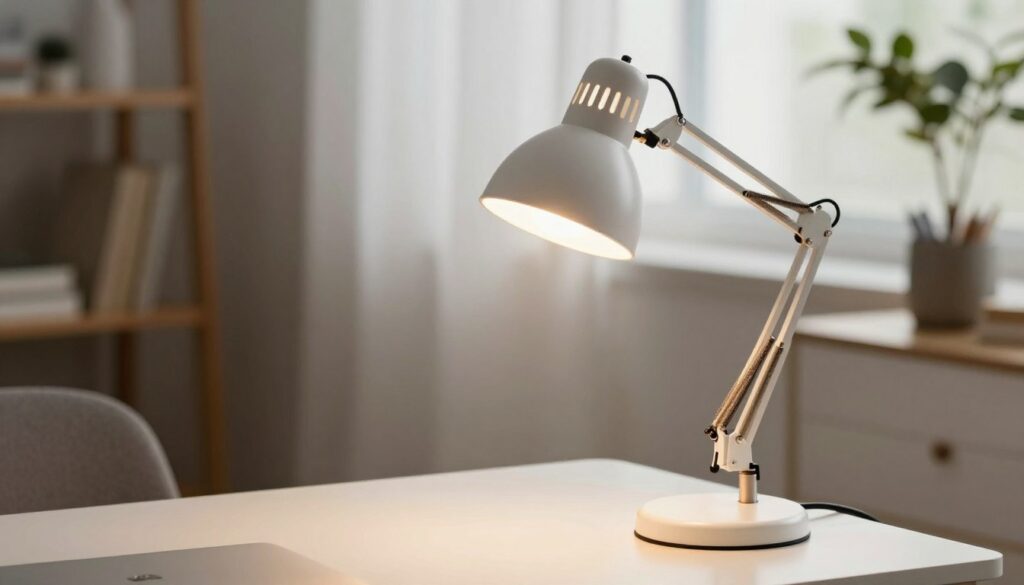
Desk lamp vs. clip-on light for small desks
Desk lamp units are flexible and often offer multiple brightness settings. They give steady coverage but take surface room.
Clip-on lights attach to a shelf or edge and reclaim desk real estate. They are ideal when you need focused illumination without losing workspace.
Fairy string lights for ambient light in tight rooms
Curtain-style fairy string lights provide ambient glow without using the desktop. Many sets sold online include eight lighting modes and warm, cool, or white options. Warm white sets start around $17.99 and add a styled layer to a small room.
Lighting modes and color temperature choices for work hours
Use cooler or white light during the day to feel more alert and support focused work. Switch to warm light later to reduce harshness and ease transitions from work to rest.
Lighting modes matter: steady light supports concentration; twinkle or color modes are best for breaks or background mood, not intense productivity.
“The right lamp frees surface area and makes a compact setup feel intentional.”
Design tip: plan one main task lamp and an ambient source so your layout looks styled and stays functional.
Fairy lights for a small home office setup that still looks designed
A simple curtain of lights gives your workspace personality without using tabletop area. You get mood and function in one easy layer that fits small rooms and tight setups.
Warm, cool, and white options and when to use each
Warm tones are cozy for evening tasks and calls. They cut glare and feel gentler on your eyes.
Cool or white options boost clarity during daytime work and help you see details. Use mixed tones when your room has uneven lighting so everything reads even.
Easy “curtain” installs for renters and small rooms
You can hang lightweight curtain strands with removable hooks or command strips. Reviewers note warm white curtain sets at about $17.99+ that “fell right into place.”
“Multiple settings and dimming made this perfect for a gaming aesthetic,” — Charlie V.
“Dimmable and fills an entire wall — great for a college apartment,” — Katie Ernst
Creating a calmer environment without taking up desk space
Styling tip: place the lights behind your monitor or along a blank wall so they don’t crowd the desk. Use a steady, low mode to soften harsh overhead light and make long sessions more comfortable.
Laptop stand essentials for better posture with less desk crowding
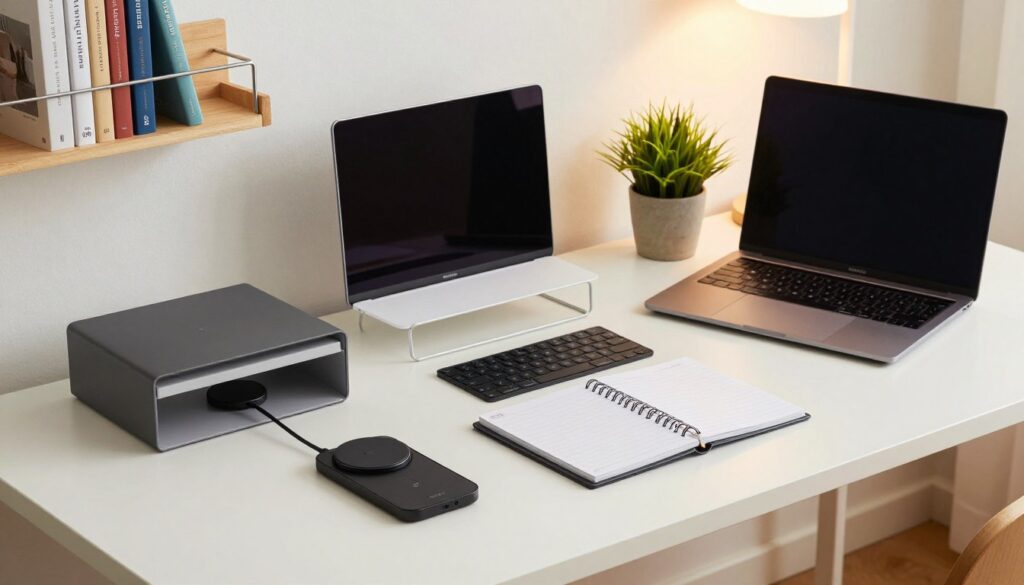
Raising your screen a few inches changes how you sit and how long you can work without pain. A compact laptop stand improves posture by bringing the display to eye level so you don’t bend your neck all day.
Portable aluminum stands to elevate your screen and reduce tech neck
Portable aluminum models like the Satechi Lightweight Aluminum Portable Laptop Stand are light, sturdy, and fold flat. They give a clean, modern look and tuck into a bag or drawer when you need the surface clear.
How to pair a raised laptop with a keyboard and mouse on a small desk
Raise the laptop and use a compact keyboard and mouse so your hands stay level with your elbows. Keep the keyboard directly in front of you and the mouse close by.
- Center the stand so the screen aligns with your monitor height when you use both.
- Push notepads and phone to the edges to protect your main workflow zone.
- If you use an external monitor, treat the laptop as a secondary display and place it off to one side or below the monitor to avoid crowding.
Small changes add up — better posture and less neck strain without needing a larger desk.
Keyboard and mouse space-savers for tighter desktops
A compact keyboard and smart mouse layout can free inches of usable desktop without any sacrifice to speed. Pick a smaller footprint and you cut reach, reduce shoulder strain, and make room for a full range of motion.
Choosing a smaller keyboard footprint without sacrificing productivity
Think about what you actually use. Many users rarely touch the numpad. A tenkeyless or 65% keyboard keeps essential keys while freeing horizontal room.
Tip: test layout options before you buy. If you need macros or frequent function keys, choose a compact model that keeps those without adding bulk.
Mouse and pad placement tips to reclaim workspace
Keep the mouse close to the keyboard to reduce reach. Angle the keyboard slightly to reclaim a few inches for your dominant hand.
A smaller pad can save surface area, but make sure it still allows smooth tracking. Sliding the pad partly under the front edge of the keyboard often gives you usable pad area without extra desktop clutter.
- Favor narrower keyboards to free lateral room for the mouse.
- Keep the mouse inline with your forearm to lower fatigue.
- Fewer oversized peripherals make desktop cleaning faster and easier.
“Less cramped movement helps you work longer with fewer micro-annoyances.”
| Item | Why it helps | Recommended placement |
|---|---|---|
| Tenkeyless keyboard | Frees right-side space for mouse reach | Center keyboard, mouse just right |
| Compact mouse | Needs less lateral travel, reduces strain | Close to keyboard, aligned with elbow |
| Small cloth pad | Smooth tracking with minimal footprint | Partly under keyboard edge or slightly offset |
Compact productivity boosters you’ll actually use every day
Choose small capture systems that fit your routine and keep priorities visible.
Reusable smart notebook ideas for quick capture without piles of paper
Reusable notebooks like the Boogie Board Blackboard Smart Scan let you jot quick notes, scan them to your phone, and erase when done. They save paper and keep your desk tidy.
Use cases: quick brainstorming, meeting notes, and “don’t forget” lists you erase each week. These tools live on the desktop or in a drawer so they’re ready when inspiration hits.
Dry-erase planning workflows for weekly tasks and deadlines
The TSJ Office Glass Desktop Whiteboard ($29) works as a weekly glance board. Put your top three priorities, deadlines, and a short checklist where you can see them all day.
Practical routine: update in the morning, tick items as you finish them, and erase or refresh at the end of the day. That simple habit cuts context-switching and saves you time.
“When your next action is visible, you waste less time deciding what to do next.”
| Tool | Best use | Placement |
|---|---|---|
| Boogie Board Blackboard Smart Scan | Quick capture & digitize | On desktop or top drawer |
| TSJ Glass Desktop Whiteboard ($29) | Weekly plan & priorities | Near monitor, visible all day |
| Compact erasable sticky pad | Short reminders & timers | Edge of desk for grab-and-go notes |
Comfort upgrades that don’t take over your home office
You don’t need a big chair swap to feel better — small tools can cut friction and calm your day. These approachable items tuck away when you don’t need them and support longer, less distracted sessions at your desk.
Small tools that reduce stress and help you stay focused
Keep a pocket-sized stress tool: a fidget cube or silicone ring fits a drawer and gives a quick reset during tense calls. It’s a simple thing that helps you breathe through interruptions.
Minimal wrist support: a low-profile gel pad reduces strain while typing and slides under the keyboard when you need surface space.
Compact foot rest alternative: a folded cushion or small foam block under your feet improves posture without claiming floor area.
Keeping your desk clean to support a healthier work environment
Cleanliness is comfort: a palm-sized desktop vacuum like the Odistar Desktop Vacuum Cleaner (~$13) clears crumbs and dust in seconds. A quick sweep makes the workspace feel fresher and more inviting.
Adopt a two-step habit: wipe crumbs with the vacuum and tidy cables for one minute at day’s end. That routine reduces distractions and protects devices from grit and spills.
“A clean desk makes it easier to sit down and get to work.”
Why small habits last: tiny, repeatable actions add up to a calmer environment and better work life. You’ll notice less friction, fewer micro-distractions, and a desk that’s ready when you are.
| Tool | Approx. price | Why it helps |
|---|---|---|
| Odistar Desktop Vacuum Cleaner | $13 | Quickly removes crumbs and dust from keyboards and surfaces |
| Fidget cube or ring | $8–$12 | Portable stress relief you can stash in a drawer |
| Low-profile gel wrist rest | $10–$20 | Reduces wrist strain and slides out of the way when not needed |
Desk-friendly coffee and hydration picks for long workdays
A compact brew setup and a smart water habit save time and protect your devices from spills. When you limit trips and reduce accidents, you keep focus and keep the day moving.
AeroPress-style brewers that tuck into a drawer or sit on a corner
The AeroPress Original Coffee Press (listed at $35) fits a small drawer or a corner of your desk. It brews quickly, cleans fast, and replaces a bulky machine with a compact tool you can stash when not in use.
How to avoid spills and keep your setup tidy near devices
Simple layout rule: place drinks on the far edge of the desk, away from your keyboard and mouse zone. Route cables the opposite way so plugs never run under a cup.
Adopt a device-safe rule: no open cups near main devices. Use a stable mug with a lid and put it in the same spot every day so habit prevents accidents.
- Keep a refillable bottle within arm’s reach to encourage water intake.
- Choose a spot that won’t drip onto cords or a laptop.
- Quick cleanup at the end of the day keeps your setup ready for tomorrow’s work.
“Fewer spills, fewer interruptions — better focus for the rest of the day.”
How to build a space-saving setup for under $35
Start with three targeted buys that solve daily friction without crowding your desk.
The best starter kit combo for a small desk
Clean desk kit: Smartish Magnetic Cord Holder (~$30) + Nulaxy Dual Folding Cell Phone Stand (~$10). This pair tames cables and gives your phone a fixed spot.
Focus kit: TSJ Office Glass Desktop Whiteboard (~$29) + warm white fairy lights (~$18). Use the whiteboard for priorities and gentle lighting to reduce glare.
Reset kit: Odistar Desktop Vacuum (~$13) + Sleek Socket Ultra-Thin Outlet Concealer (~$29) to keep crumbs gone and power tucked behind furniture.
Where each item goes: monitor area, desktop, drawer, and floor
Keep the phone stand at the desktop edge, near your monitor so you avoid looking down. Mount the cord holder along the same edge for quick reach.
Store extra supplies in a drawer for neat storage. Route one cable run down a desk leg so the floor stays clear for cleaning and safety.
Fast reset routine to keep your workspace organized day after day
- Dock devices for charging, 30 seconds.
- Quick wipe or vacuum of the desktop, 30 seconds.
- Return loose items to the drawer or storage bin, 30 seconds.
- Align cables and tuck the power strip behind the desk, 30 seconds.
The best part: once every item has a home, this two-minute ritual keeps your design intentional and your workspace ready.
| Starter Kit | Items | Approx. cost | Best use |
|---|---|---|---|
| Clean desk kit | Cord holder + Phone stand | $40 | Quick access & tidy edge |
| Focus kit | Glass whiteboard + Fairy lights | $47 | Visual priorities & softer light |
| Reset kit | Desktop vacuum + Outlet concealer | $42 | Clean surfaces & hidden power |
Conclusion
A few focused upgrades will make your desk easier to use every day. Start small and solve the one thing that slows you most. That single change often delivers the biggest payoff.
Choose items that cut clutter and fit your storage reality, not just trendy buys. Favor tools that tuck away, fold flat, or anchor where you need them so your setup stays tidy and useful.
Begin with your biggest friction point — cables, sticky notes, phone placement, lighting, or posture — then add one upgrade at a time. Build a simple two-minute daily reset: dock, wipe, and tuck.
Pick a starter kit, place each item intentionally near your monitor, and enjoy a calmer workspace that supports better work every day.
FAQ
What exactly counts as a space-saving gadget for your desk, drawer, and room?
How do small, affordable tools improve your workflow and comfort?
How should you prioritize workflow, storage, and comfort on a tight budget?
What criteria did you use to pick compact picks under ?
Are inexpensive items durable enough for daily use?
Which gadgets hide or manage charging cables best?
How can you fit a keyboard and mouse on a really small desk?
What’s the best way to place a phone stand for video calls and charging?
Are clip-on lights better than full desk lamps for tight setups?
How do you keep a workspace flexible for laptops and multiple monitors?
What are simple routing tips to avoid cables running across the floor?
Can a desktop vacuum really help keep a clean keyboard and surface?
How do you choose a power strip when outlets are limited?
What lighting color temperature helps during focused work hours?
How do fairy string lights fit into a compact setup without cluttering the desk?
What portable laptop stand should you pick to improve posture without crowding your desk?
What’s a good starter kit combo to build a compact setup for low cost?
How do you keep the workspace organized day after day with minimal effort?
Where should items go: monitor area, desktop, drawer, and floor?

Igor Silva is the founder of CNF Products Offer, where he researches and reviews everyday products to help smart buyers cut through the noise of fake reviews and overhyped gadgets. Based in Rio de Janeiro, Brazil, Igor focuses on honest insights, real-world value, and verified deals—so you spend less time searching and more time enjoying what actually works.